
1.2 Shared Reality and Modeling: Difference between revisions
More actions
// Edit via Wikitext Extension for VSCode |
// via Wikitext Extension for VSCode |
||
| (32 intermediate revisions by 2 users not shown) | |||
| Line 1: | Line 1: | ||
{{Cover|1.2 Shared Reality and Modeling}} | |||
Humanity has been able to build a common body of knowledge through the assumption of a shared external reality, with patterns of sufficient regularity that they can be studied empirically by many people, with observations shared and accumulated. These patterns are represented through a process of simplification and analogizing called scientific modeling. | |||
== The Lesson in Context == | == The Lesson in Context == | ||
<!-- Always begin section with a description of this lesson in relation to the course as a whole. --> | <!-- Always begin section with a description of this lesson in relation to the course as a whole. --> | ||
In this lesson, we lay the philosophical groundwork for future topics by establishing a common set of assumptions and attitudes in science, namely, that the world is full of regular patterns that can be studied empirically, and that scientific knowledge is constantly evolving in light of new evidence. | In this lesson, we lay the philosophical groundwork for future topics by establishing a common set of assumptions and attitudes in science, namely, that the world is full of regular patterns that can be studied empirically, and that scientific knowledge is constantly evolving in light of new evidence. | ||
<!-- Expandable section relating this lesson to other lessons. --> | |||
<!-- Expandable section relating this lesson to | {{Expand|Relation to Other Lessons| | ||
{{Expand|Relation to Earlier Lessons | '''Earlier Lessons''' | ||
{{ContextLesson|1.1 Introduction and When Is Science Relevant}} | {{ContextLesson|1.1 Introduction and When Is Science Relevant}} | ||
{{ContextRelation|Decision making relies on knowing the effects of each decision in the real world. Collective decision making thus relies on a collective understanding of the shared reality through the scientific method.}} | {{ContextRelation|Decision making relies on knowing the effects of each decision in the real world. Collective decision making thus relies on a collective understanding of the shared reality through the scientific method.}} | ||
}} | {{Line}} | ||
'''Later Lessons''' | |||
{{ContextLesson|2.2 Systematic and Statistical Uncertainty}} | {{ContextLesson|2.2 Systematic and Statistical Uncertainty}} | ||
{{ContextRelation|Our understanding of the shared reality is never perfect, but is always improving. When it comes to measured quantities, it is possible and necessary to quantify the inaccuracy or imprecision in our description of the shared reality.}} | {{ContextRelation|Our understanding of the shared reality is never perfect, but is always improving. When it comes to measured quantities, it is possible and necessary to quantify the inaccuracy or imprecision in our description of the shared reality.}} | ||
| Line 30: | Line 24: | ||
{{ContextRelation|A type of event that helps the public make better group decisions after being informed on the relevant (shared) facts about an issue.}} | {{ContextRelation|A type of event that helps the public make better group decisions after being informed on the relevant (shared) facts about an issue.}} | ||
}} | }} | ||
== Takeaways == | == Takeaways == | ||
<tabber> | <tabber> | ||
|-|Learning Goals= | |-|Learning Goals= | ||
After this lesson, students should | After this lesson, students should | ||
<!-- Learning goals are written as a numbered list. --> | <!-- Learning goals are written as a numbered list. --> | ||
| Line 46: | Line 36: | ||
{{BoxCaution|It's easy for students to get hung up on philosophical minutiae or edge cases of what really is reality, or does it even exist. Try to pull students back to the main goal of making practical decisions in our lives or in society by using science to understand the assumed shared reality. We only need things to be as real as the table in the middle of the room, so one can walk around it and avoid hurting oneself.}} | {{BoxCaution|It's easy for students to get hung up on philosophical minutiae or edge cases of what really is reality, or does it even exist. Try to pull students back to the main goal of making practical decisions in our lives or in society by using science to understand the assumed shared reality. We only need things to be as real as the table in the middle of the room, so one can walk around it and avoid hurting oneself.}} | ||
<br /> | <br /> | ||
|-|Definitions= | |-|Definitions= | ||
<!-- Definitions must be written with the Definition and Subdefinition templates. The first Definition should have the "first=yes" flag at the end. --> | <!-- Definitions must be written with the Definition and Subdefinition templates. The first Definition should have the "first=yes" flag at the end. --> | ||
{{Definition|Raft vs. Pyramid|Two different metaphors for scientific progress.|first=yes}} | {{Definition|Raft vs. Pyramid|Two different metaphors for scientific progress.|first=yes}} | ||
| Line 76: | Line 64: | ||
{{Subdefinition|Operationalist Metrics|When the truth of a metric is taken to consist of the ''operations'' involved in proving or applying it.}} | {{Subdefinition|Operationalist Metrics|When the truth of a metric is taken to consist of the ''operations'' involved in proving or applying it.}} | ||
{{Subdefinition|Realist Metrics|When the truth of a metric isn't based on human choices, but instead on some ''real'' phenomena in the world at large.}} | {{Subdefinition|Realist Metrics|When the truth of a metric isn't based on human choices, but instead on some ''real'' phenomena in the world at large.}} | ||
|-|Examples= | |-|Examples= | ||
{{Example | |||
|Types of Metrics: Development of Thermometers | |||
|When scientists first developed thermometers, several different substances were used. The problem was, these substances had different rates of expansion, yielding different ways to quantify "temperature." For example, water, alcohol, and mercury expand at different rates: if you set up thermometers with "0 degrees" equalized, each of the substances will hit "100 degrees" at a different temperature. How, then, do we know which kind of thermometer to use? Is the temperature "really" 100 degrees when a mercury thermometer says so, or when a water thermometer says so?}} | |||
{{Example | |||
{{ | |Operationalism vs. Realism: Colors | ||
|Whose reality is more representative of the "true" colors of the world? Ours, or that of the mantis shrimp? | |||
* The operational answer is that we can't compare these two because both are correct in their own way. | |||
* The realist answer is that neither animal can fully see the full spectrum, and through science we can try to understand it. | |||
The point is that the mantis shrimp sees more of the real world than we do, but neither has a perfect representation of the world.}} | |||
{{Example | |||
{{ | |Spherical Cows | ||
|A common "joke" among physicists is that cows can be modeled as spheres for the purposes of solving many types of problems (such as those involving mass, volume, surface area, and the like). | |||
|links={{LinkCard | |||
{{LinkCard | |||
|url=https://en.wikipedia.org/wiki/Spherical_cow | |url=https://en.wikipedia.org/wiki/Spherical_cow | ||
|title=Spherical Cows | |title=Spherical Cows | ||
|description=A Wikipedia article with more information.}} | |description=A Wikipedia article with more information.}} | ||
}} | |||
{{Exemplary | |||
|{{Blockquote|Science means, first of all, a certain dispassionate method. To suppose that it means a certain set of results that one should pin one’s faith upon and hug forever is sadly to mistake its genius, and degrades the scientific body to the status of a sect.|William James, 'What Psychical Research Has Accomplished,' ''Will to Believe''}} | |||
{{Blockquote|In many instances...scientific realism makes judgments...Who are we to assert the superiority of western science over the systems of thoughts that prevail in other regions of the world? That question should not be rhetorical. Consider the suggestion that western beliefs about the mechanisms of heredity are closer to the truth than those current among some culturally distinct group. Defense of the suggestion need not deny the 'natural rationality' of members of this group. Instead, champions of genetics should point out that western scientists and their societies have had a greater interest in this topic, that our range of experience of hereditary systems is much broader, that we stand in a tradition in which substantial effort has been expended in building on the achievements of previous investigators, and so forth. Furthermore, we rightly appraise the tradition critically, and part of the critical attitude should lead us to inquire if the rival views, based on different experiences, provide grounds for revising or enriching our beliefs.|Philip Kitcher, ''Science, Truth, and Democracy'', p. 13.}} | |||
{{Blockquote|They seem to think that anybody’s opinion is as good as anybody else’s on this matter where there is only one reality out there. It may be hard to figure out, but it’s still there anyway.}} | |||
{{Blockquote|Either the earth is going to warm by >4 degrees over the next 50 years because of human-added greenhouse gasses or not—whether or not the proponents on each side of the debate are biased! ‘Nature always bats last.’}} | |||
{{Blockquote|Science is better at forming accurate representations than any other way of thinking because it is (a.) responsive to empirical evidence, that is, observations of a shared reality replicated by multiple scientists and (b.) open to being changed in light of new considerations and new evidence. Moreover, scientists are always looking for ways that their colleagues or that they themselves might have gone wrong, so they can fix it. The proof is in the pudding here; we know science works because science has produced planes that fly, phones that let us talk to each other and find out what others have written and said, and taken human beings to the moon and back. The technologies and accomplishments of science are of a kind significantly different from and beyond any other way of knowing, at least for the questions that lend themselves to empirical investigation.}} | |||
}} | |||
|-|Common Misconceptions= | |-|Common Misconceptions= | ||
<!-- Misconceptions must be written with the Misconception template. The first Misconception should have the "first=yes" flag at the end. --> | <!-- Misconceptions must be written with the Misconception template. The first Misconception should have the "first=yes" flag at the end. --> | ||
{{Misconception|Science always changes its mind. One day drinking wine is good for you, the next day it isn't anymore. Why should we trust anything scientists say?|When scientists make any claim, they make it always with some level of uncertainty, leaving open the possibility that they may be wrong. Any claim is subject to scrutiny and may be overturned or amended by new evidence. The ever changing and improving nature of scientific knowledge is a strength, not a weakness.|first=yes}} | {{Misconception|Science always changes its mind. One day drinking wine is good for you, the next day it isn't anymore. Why should we trust anything scientists say?|When scientists make any claim, they make it always with some level of uncertainty, leaving open the possibility that they may be wrong. Any claim is subject to scrutiny and may be overturned or amended by new evidence. The ever changing and improving nature of scientific knowledge is a strength, not a weakness.|first=yes}} | ||
| Line 104: | Line 95: | ||
{{Misconception|[[File:Innocent Reddit Post.png|thumb]]I want to understand physics well enough to write a program that closely simulates our universe. How to achieve this as fast as possible?|Finite computation power means that it is necessary to simplify our models for simulation. The simplification has to depend on the question one is trying to answer with the simulation. It is infeasible to "simulate everything" also because even the best model involves simplifications and idealizations.}} | {{Misconception|[[File:Innocent Reddit Post.png|thumb]]I want to understand physics well enough to write a program that closely simulates our universe. How to achieve this as fast as possible?|Finite computation power means that it is necessary to simplify our models for simulation. The simplification has to depend on the question one is trying to answer with the simulation. It is infeasible to "simulate everything" also because even the best model involves simplifications and idealizations.}} | ||
{{Misconception|So what if our model of reality is "wrong" if it makes our lives more harmonious? And maybe we can just agree to disagree.|If it's a belief that affects a decision and its likely outcome than at ''some'' point your misconception is going to catch up with you.}} | {{Misconception|So what if our model of reality is "wrong" if it makes our lives more harmonious? And maybe we can just agree to disagree.|If it's a belief that affects a decision and its likely outcome than at ''some'' point your misconception is going to catch up with you.}} | ||
|-|Expanded Learning Goals= | |||
After this lesson, students should | |||
# Attitudes | |||
## Understand that the self-correcting and ever-changing nature of science is a strength, not a weakness. | |||
## Feel optimistic about the capacity of science to help solve problems for societal and personal decision-making. | |||
## Understand the need for scientific modeling and how our knowledge of reality is necessarily expressed in terms of models. | |||
# Concept Acquisition | |||
## '''Assumption of Reality:''' Scientists assume an external reality, which is shared by and affects all people and has enough regularity to lend itself to induction. This external reality is what scientists seek to describe accurately. | |||
## '''Empirical Evidence:''' Science is based on appeal to empirical evidence, which is publicly accessible on the assumption of reality (although may require special instruments and/or expertise to acquire). | |||
## '''Scientific Modeling:''' Scientific modeling aims to represent the structure of a natural system, which may include spatial, causal, or other relations between elements. Models can be used to construct explanations and make predictions. Models involve assumptions and simplifications. As such, different models which make different assumptions or simplifications may better serve different purposes. All of our representations of the world, including direct perceptions, are necessarily processed through models which have built-in simplifications, assumptions, and missing details. | |||
## '''Validity of Models:''' The extent to which a scientific model has a structure analogous to the target external phenomena, enabling accurate inferences and predictions. Criteria for a good model may include ease of use, explanatory power, predictive power for desired predictions, refutability (verifiable predictions), and well-calibrated confidence in given predictions. | |||
## '''Science vs. Decree:''' Science gains its authority from its self-questioning character, not from the concentrated power of individuals. | |||
## '''The process of science leads to self-correction through:''' | |||
### Active experimentation & observation | |||
### Peer review | |||
### Rewards for better theories, even those that contradict current theories | |||
### Responsiveness to new evidence/actively open-minded thinking | |||
### Replicability and replication | |||
### Multiple approaches to each problem allow convergent evidence | |||
### Interconnected nature of science, and ongoing attempts to connect the pieces that are not yet connected (e.g. Biological Synthesis of genetics & natural selection as a successful instance, cognitive neuroscience as an instance of integration currently in progress, the challenge of connecting quantum physics to general relativity…). | |||
## '''The Raft vs. the Pyramid metaphors for science:''' | |||
### The Raft: Every scientific claim is subject to question and reevaluation; we can use the rest of our scientific knowledge to question any one claim at a time, though we cannot question the entire edifice at once. | |||
### The Pyramid: Science builds on fixed foundations to ever higher levels of knowledge. | |||
## '''[Social Constructivism]:''' “The reality [of a scientific entity or fact] is formed as a consequence of stabilization [of a controversy].” (Latour & Woolgar, 1986) | |||
## '''[Badging]:''' The phenomenon of people using claims of fact to express their identity or group affiliation. | |||
# Concept Application | |||
## Defend critiques of science based on its provisionality by appeal to its self-correcting properties. | |||
## Explain and contrast the metaphors of raft vs. pyramid for science. | |||
## Identify strengths/weaknesses in Raft & Pyramid metaphors for science. | |||
### e.g. Some scientific theories are more central than others, and harder to replace. But all scientific theories are, in principle, open to revision in light of new evidence. | |||
## [Distinguish concept validity from (1) a social-constructivist picture of scientific concepts free-floating in a world of mutual agreement among power brokers, not moored to a universally shared reality, and (2) subjective preferences.] | |||
### Identify cases where concept validity is expected (e.g. What is a quark/electron/boson? What is an animal?) | |||
### Identify cases where social constructivism might be a good approach (e.g. What is her name? What is the name of this city?) | |||
### Identify cases where preference might be sufficient (e.g. Which chocolate is tastiest? Which color palette is prettiest?) | |||
## Use the concept of validity to assess scientific claims, contrasting cases where the validity of the concept is on stronger vs. weaker footing. | |||
### In straightforward cases (e.g. Everyone or nearly everyone can agree about which animals are cats, and consequently agree that most cats have fur, etc.) | |||
### In less straightforward cases (e.g. Claims about bosons, dark energy, what sort of black hole is at the center of the Milky Way) | |||
### In difficult cases (e.g. Disagreement is rife over what intelligence is, so claims about the relative intelligence of two groups of people are more questionable.) | |||
## [Recognize cases where apparent claims of fact may also be characterized as expressions of affiliation or identity (i.e. badging).] | |||
### e.g. Stated acceptance of creationism and rejection of evolution is only very weakly responsive to education and strongly associated with affiliative factors like religion, religiosity, and political ideology, suggesting that it may be (to some extent) a result of badging. | |||
## [Falsifiability]: Scientific claims are taken more seriously if they are testable. | |||
</tabber> | </tabber> | ||
{{#restricted:{{Private:1.2 Shared Reality and Modeling}}}} | |||
{{NavCard|chapter=Lesson plans|text=All lesson plans|prev=1.1 Introduction and When Is Science Relevant|next=2.1 Senses and Instrumentation}} | |||
{{ | |||
{{ | |||
{{ | |||
[[Category:Lesson plans]] | [[Category:Lesson plans]] | ||
Latest revision as of 22:10, 11 June 2026

Humanity has been able to build a common body of knowledge through the assumption of a shared external reality, with patterns of sufficient regularity that they can be studied empirically by many people, with observations shared and accumulated. These patterns are represented through a process of simplification and analogizing called scientific modeling.
The Lesson in Context
In this lesson, we lay the philosophical groundwork for future topics by establishing a common set of assumptions and attitudes in science, namely, that the world is full of regular patterns that can be studied empirically, and that scientific knowledge is constantly evolving in light of new evidence.
Earlier Lessons

- Decision making relies on knowing the effects of each decision in the real world. Collective decision making thus relies on a collective understanding of the shared reality through the scientific method.
Later Lessons

- Our understanding of the shared reality is never perfect, but is always improving. When it comes to measured quantities, it is possible and necessary to quantify the inaccuracy or imprecision in our description of the shared reality.

- Since every claim of fact is to some degree uncertain, each claim should be associated with a level of confidence, or a probability that it is correct.

- Although the first step of a scientific attitude is to admit one's ignorance or the uncertainty in one's knowledge, it is still possible to make progress by successive iterative improvements.
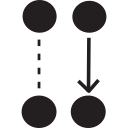
- One important aspect of the shared reality is cause and effect, which is studied in a series of future lessons on causation.

- When constructing a model of a complex system, we need to abstract out the most important aspects of the system in relation to the question at hand. This requires understanding (or hypothesizing) the order of importance of various aspects of the system, so that only the top one(s) are considered.

- A type of event that helps the public make better group decisions after being informed on the relevant (shared) facts about an issue.
Takeaways
After this lesson, students should
- Understand that the self-correcting and ever-changing nature of science is a strength, not a weakness.
- Feel optimistic about the capacity of science to help solve problems for societal and personal decision-making.
- Understand the assumption of shared reality with regular patterns and the power of empirical evidence as a way to study this shared reality.
- Appreciate that scientific knowledge is built more like a raft than a pyramid.
- Understand the need for scientific modelling and how our knowledge of reality is necessarily expressed in terms of models.
It's easy for students to get hung up on philosophical minutiae or edge cases of what really is reality, or does it even exist. Try to pull students back to the main goal of making practical decisions in our lives or in society by using science to understand the assumed shared reality. We only need things to be as real as the table in the middle of the room, so one can walk around it and avoid hurting oneself.
Raft vs. Pyramid
- The Raft
- The Pyramid
Scientific Models
Assumption of Reality
Empirical Evidence
Evaluation of Models
- Ability to explain past observations.
- Ability to explain future observations.
- Simplicity or ease of use.
- Refutability and the ability to characterize our confidence in the model for a given problem.
Science vs. Decree
Additional Definitions
What follows are additional definitions that appear in or are relevant to the lecture, but aren't deeply covered in this discussion's lesson plan. They do, however, come up quite a bit later in the course. We would like to cover them if we had more time. They are especially relevant to 11.2 When Is Science Suspect.
Realism vs. Idealism
- Realism
- Idealism
Scientific Realism vs. Anti-realism
- Scientific Realism
- Scientific Anti-realism
- Scientific theories can never "reach beyond" experience in what they say.
- Perhaps scientific theories can make claims that reach further, but we can't ever expect to get claims of that kind right.
- The objects of scientific study themselves do not exist in a truly mind-independent fashion.
Metric
- Conventionalist Metrics
- Operationalist Metrics
- Realist Metrics
Types of Metrics: Development of Thermometers
Operationalism vs. Realism: Colors
- The operational answer is that we can't compare these two because both are correct in their own way.
- The realist answer is that neither animal can fully see the full spectrum, and through science we can try to understand it.
Spherical Cows
Exemplary Quotes
“Science means, first of all, a certain dispassionate method. To suppose that it means a certain set of results that one should pin one’s faith upon and hug forever is sadly to mistake its genius, and degrades the scientific body to the status of a sect.”
William James, 'What Psychical Research Has Accomplished,' Will to Believe
“In many instances...scientific realism makes judgments...Who are we to assert the superiority of western science over the systems of thoughts that prevail in other regions of the world? That question should not be rhetorical. Consider the suggestion that western beliefs about the mechanisms of heredity are closer to the truth than those current among some culturally distinct group. Defense of the suggestion need not deny the 'natural rationality' of members of this group. Instead, champions of genetics should point out that western scientists and their societies have had a greater interest in this topic, that our range of experience of hereditary systems is much broader, that we stand in a tradition in which substantial effort has been expended in building on the achievements of previous investigators, and so forth. Furthermore, we rightly appraise the tradition critically, and part of the critical attitude should lead us to inquire if the rival views, based on different experiences, provide grounds for revising or enriching our beliefs.”
Philip Kitcher, Science, Truth, and Democracy, p. 13.
“They seem to think that anybody’s opinion is as good as anybody else’s on this matter where there is only one reality out there. It may be hard to figure out, but it’s still there anyway.”
“Either the earth is going to warm by >4 degrees over the next 50 years because of human-added greenhouse gasses or not—whether or not the proponents on each side of the debate are biased! ‘Nature always bats last.’”
“Science is better at forming accurate representations than any other way of thinking because it is (a.) responsive to empirical evidence, that is, observations of a shared reality replicated by multiple scientists and (b.) open to being changed in light of new considerations and new evidence. Moreover, scientists are always looking for ways that their colleagues or that they themselves might have gone wrong, so they can fix it. The proof is in the pudding here; we know science works because science has produced planes that fly, phones that let us talk to each other and find out what others have written and said, and taken human beings to the moon and back. The technologies and accomplishments of science are of a kind significantly different from and beyond any other way of knowing, at least for the questions that lend themselves to empirical investigation.”
Science always changes its mind. One day drinking wine is good for you, the next day it isn't anymore. Why should we trust anything scientists say?
Taking the logs of the science-raft for "ideals" rather than claims. Well, I just happen to think that if you punish people whenever they misread a word they will learn to read much faster—and most people agree with me. So...

So what if our model of reality is "wrong" if it makes our lives more harmonious? And maybe we can just agree to disagree.
After this lesson, students should
- Attitudes
- Understand that the self-correcting and ever-changing nature of science is a strength, not a weakness.
- Feel optimistic about the capacity of science to help solve problems for societal and personal decision-making.
- Understand the need for scientific modeling and how our knowledge of reality is necessarily expressed in terms of models.
- Concept Acquisition
- Assumption of Reality: Scientists assume an external reality, which is shared by and affects all people and has enough regularity to lend itself to induction. This external reality is what scientists seek to describe accurately.
- Empirical Evidence: Science is based on appeal to empirical evidence, which is publicly accessible on the assumption of reality (although may require special instruments and/or expertise to acquire).
- Scientific Modeling: Scientific modeling aims to represent the structure of a natural system, which may include spatial, causal, or other relations between elements. Models can be used to construct explanations and make predictions. Models involve assumptions and simplifications. As such, different models which make different assumptions or simplifications may better serve different purposes. All of our representations of the world, including direct perceptions, are necessarily processed through models which have built-in simplifications, assumptions, and missing details.
- Validity of Models: The extent to which a scientific model has a structure analogous to the target external phenomena, enabling accurate inferences and predictions. Criteria for a good model may include ease of use, explanatory power, predictive power for desired predictions, refutability (verifiable predictions), and well-calibrated confidence in given predictions.
- Science vs. Decree: Science gains its authority from its self-questioning character, not from the concentrated power of individuals.
- The process of science leads to self-correction through:
- Active experimentation & observation
- Peer review
- Rewards for better theories, even those that contradict current theories
- Responsiveness to new evidence/actively open-minded thinking
- Replicability and replication
- Multiple approaches to each problem allow convergent evidence
- Interconnected nature of science, and ongoing attempts to connect the pieces that are not yet connected (e.g. Biological Synthesis of genetics & natural selection as a successful instance, cognitive neuroscience as an instance of integration currently in progress, the challenge of connecting quantum physics to general relativity…).
- The Raft vs. the Pyramid metaphors for science:
- The Raft: Every scientific claim is subject to question and reevaluation; we can use the rest of our scientific knowledge to question any one claim at a time, though we cannot question the entire edifice at once.
- The Pyramid: Science builds on fixed foundations to ever higher levels of knowledge.
- [Social Constructivism]: “The reality [of a scientific entity or fact] is formed as a consequence of stabilization [of a controversy].” (Latour & Woolgar, 1986)
- [Badging]: The phenomenon of people using claims of fact to express their identity or group affiliation.
- Concept Application
- Defend critiques of science based on its provisionality by appeal to its self-correcting properties.
- Explain and contrast the metaphors of raft vs. pyramid for science.
- Identify strengths/weaknesses in Raft & Pyramid metaphors for science.
- e.g. Some scientific theories are more central than others, and harder to replace. But all scientific theories are, in principle, open to revision in light of new evidence.
- [Distinguish concept validity from (1) a social-constructivist picture of scientific concepts free-floating in a world of mutual agreement among power brokers, not moored to a universally shared reality, and (2) subjective preferences.]
- Identify cases where concept validity is expected (e.g. What is a quark/electron/boson? What is an animal?)
- Identify cases where social constructivism might be a good approach (e.g. What is her name? What is the name of this city?)
- Identify cases where preference might be sufficient (e.g. Which chocolate is tastiest? Which color palette is prettiest?)
- Use the concept of validity to assess scientific claims, contrasting cases where the validity of the concept is on stronger vs. weaker footing.
- In straightforward cases (e.g. Everyone or nearly everyone can agree about which animals are cats, and consequently agree that most cats have fur, etc.)
- In less straightforward cases (e.g. Claims about bosons, dark energy, what sort of black hole is at the center of the Milky Way)
- In difficult cases (e.g. Disagreement is rife over what intelligence is, so claims about the relative intelligence of two groups of people are more questionable.)
- [Recognize cases where apparent claims of fact may also be characterized as expressions of affiliation or identity (i.e. badging).]
- e.g. Stated acceptance of creationism and rejection of evolution is only very weakly responsive to education and strongly associated with affiliative factors like religion, religiosity, and political ideology, suggesting that it may be (to some extent) a result of badging.
- [Falsifiability]: Scientific claims are taken more seriously if they are testable.
Additional Content
You must be logged in to see this content.