
Course introduction: Difference between revisions
More actions
// Edit via Wikitext Extension for VSCode |
No edit summary |
||
| (18 intermediate revisions by the same user not shown) | |||
| Line 6: | Line 6: | ||
We explore these themes experientially, often with in-class activities and discussions, culminating in two open-ended projects to design better methods of deliberation and decision making, first as groups, and then as individuals. Co-taught at UC Berkeley by faculty from Physics, Philosophy, and the social sciences, SSS fosters intellectual advancement for interdisciplinary knowledge seekers. | We explore these themes experientially, often with in-class activities and discussions, culminating in two open-ended projects to design better methods of deliberation and decision making, first as groups, and then as individuals. Co-taught at UC Berkeley by faculty from Physics, Philosophy, and the social sciences, SSS fosters intellectual advancement for interdisciplinary knowledge seekers. | ||
<!-- This is a university course on the ideas from science that are most widely useful for everyone. Many insights and conceptual tools from scientific thinking are of great utility for all kinds of reasoning, from reading the news critically to making decisions under conditions of uncertainty. The focus in this course is on the errors humans tend to make, and the approaches scientific methodology has developed (and continues to develop) to minimize those errors. The course includes a discussion of the nature of science, what makes science such an effective way of knowing, how both non-scientific thinking and scientific thinking can go awry, and how we can reason more clearly and successfully as individuals, as members of groups, and as citizens of a democracy. | |||
== Related Projects == | |||
=== Third Millennium Thinking === | |||
[[File:Third Millennium Thinking.jpg|thumb|link=https://thirdmillenniumthinking.com/]] | |||
[Based on Sense and Sensibility and Science and written by the course's original professors, Third Millennium Thinking is] a primer on how to think critically, make sound decisions, and solve problems—individually and collectively—using scientists' tricks of the trade. | |||
In our deluge of information, it's getting harder and harder to distinguish the revelatory from the contradictory. How do we make health decisions in the face of conflicting medical advice? Does that article on GMOs even show what the authors claim? How can we navigate the next Thanksgiving discussion with our in-laws, who follow completely different experts on climate? | |||
In ''Third Millennium Thinking'', a physicist, a psychologist, and a philosopher introduce readers to the tools and frameworks that scientists have developed to keep from fooling themselves, to understand the world, and to make decisions. We can all borrow these trust-building techniques to tackle problems both big and small. | |||
Readers will learn: | |||
* How to achieve a ground-level understanding of the facts of the modern world | |||
* How to chart a course through profusion of possibilities | |||
* How to work together to take on the challenges we face today | |||
* And much more | |||
Using provocative thought exercises, jargon-free language, and vivid illustrations drawn from history, daily life, and scientists' insider stories, ''Third Millennium Thinking'' offers a novel approach for readers to make sense of the nonsense. | |||
{{LinkCard | |||
|url=https://thirdmillenniumthinking.com/ | |||
|title=Third Millennium Thinking: Creating Sense in a World of Nonsense | |||
|description=Book based on Sense Sensibility and Science. Written by the course's original professors.}} | |||
=== Scientific Thinking For All: A Toolkit === | |||
[[File:Evidence and Iteration in Science - Student Book.png|thumb|link=https://www.nobelprize.org/scientific-thinking-for-all/]] | |||
Developed in collaboration with Nobel Prize Outreach and the Lawrence Hall of Science, ''Scientific Thinking for All: A Toolkit'' is a multi-unit high school curriculum based on Sense and Sensibility and Science, but targeted towards a younger audience. The course is suitable for any teachers with English-speaking students aged 14-18. | |||
''Scientific Thinking for All: A Toolkit'' is designed to prepare high school students for the challenges and opportunities ahead. It teaches a toolkit of cognitive strategies for real-world issues. By learning to view the world scientifically, students will develop skills in reasoning and collaborating, equipping them to deal with the challenges of the 21st century. | |||
The curriculum takes the form of six units, each using a specific problem as a frame for different concepts from Sense and Sensibility and Science. The first of these, "Evidence and Iteration in Science," starts at a more foundational level than the undergraduate course. It uses clean water access as prompt to teach students how and why collecting empirical evidence (through [[2.1 Senses and Instrumentation|senses and instrumentation]], [[5.2 Scientific Optimism|iteratively]], and [[3.2 Calibration of Credence Levels#Actively Open-minded Thinking and Growth Mindset Surveys|willingness to change our minds]]) helps us approach more accurate and complete representations of [[1.2 Shared Reality and Modeling|the material world]]. The course helps students understand how these representative models allow us to make informed decisions. | |||
{{LinkCard | |||
|url=https://www.nobelprize.org/scientific-thinking-for-all/ | |||
|title=Scientific Thinking for All: A Toolkit | |||
|description=Highschool curriculum based on Sense Sensibility and Science. Created in conjunction with the Lawrence Hall of Science and Nobel Foundation.}}<!-- This is a university course on the ideas from science that are most widely useful for everyone. Many insights and conceptual tools from scientific thinking are of great utility for all kinds of reasoning, from reading the news critically to making decisions under conditions of uncertainty. The focus in this course is on the errors humans tend to make, and the approaches scientific methodology has developed (and continues to develop) to minimize those errors. The course includes a discussion of the nature of science, what makes science such an effective way of knowing, how both non-scientific thinking and scientific thinking can go awry, and how we can reason more clearly and successfully as individuals, as members of groups, and as citizens of a democracy. | |||
Every day we make decisions that can and should be informed by science. We make decisions as individuals, as voters, and as members of our various communities. We make decisions as students and parents and policy makers. The problem is, we don't do it so well—a fact sadly apparent in political debates. It's easy to blame poor decision-making on the greed, irresponsibility, ignorance, or incompetence of other people. But the problem seems to be more basic than that. It seems we face a paradox. Living in a democracy means that everyone should get a say. But to make decisions informed by science, we often need to defer to those with relevant expertise. Therefore, we shouldn't rely on a democratic system to make the best decisions. Or should we? This basic tension between expertise and democracy serves as a unifying theme for SSS, a course that aims to equip students with basic tools to be better thinkers. We will explore key aspects of scientific thinking that everyone should know, especially the many ways that we humans tend to fool ourselves, and how to avoid them—including how to differentiate signal from noise, evaluate causal claims, and avoid reasoning biases. We'll then look at the best models for using science to guide decisions, since the rational and arational (e.g., values, fears, and goals) then have to be combined. We will explore these themes experientially, often with in-class activities and discussions, and we will culminate in two open-ended projects to design better methods of deliberation and decision making, first as groups, and then as individuals. Co-taught by faculty from Physics, Philosophy, and the social sciences, SSS fosters intellectual advancement for interdisciplinary knowledge seekers. | Every day we make decisions that can and should be informed by science. We make decisions as individuals, as voters, and as members of our various communities. We make decisions as students and parents and policy makers. The problem is, we don't do it so well—a fact sadly apparent in political debates. It's easy to blame poor decision-making on the greed, irresponsibility, ignorance, or incompetence of other people. But the problem seems to be more basic than that. It seems we face a paradox. Living in a democracy means that everyone should get a say. But to make decisions informed by science, we often need to defer to those with relevant expertise. Therefore, we shouldn't rely on a democratic system to make the best decisions. Or should we? This basic tension between expertise and democracy serves as a unifying theme for SSS, a course that aims to equip students with basic tools to be better thinkers. We will explore key aspects of scientific thinking that everyone should know, especially the many ways that we humans tend to fool ourselves, and how to avoid them—including how to differentiate signal from noise, evaluate causal claims, and avoid reasoning biases. We'll then look at the best models for using science to guide decisions, since the rational and arational (e.g., values, fears, and goals) then have to be combined. We will explore these themes experientially, often with in-class activities and discussions, and we will culminate in two open-ended projects to design better methods of deliberation and decision making, first as groups, and then as individuals. Co-taught by faculty from Physics, Philosophy, and the social sciences, SSS fosters intellectual advancement for interdisciplinary knowledge seekers. | ||
Latest revision as of 21:15, 21 February 2024

Thanks to the accelerating technology and cultural change of the information age, we find ourselves at a crossroads in human history. The decisions that we collectively make as a society in the next few years will have enormous ramifications for centuries to come, with potential for both unprecedented flourishing and unprecedented catastrophe. This class draws on a vital source for discovery and decision-making that is often underutilized—the practices and techniques that scientists have been developing for centuries and use every day. These practices constitute a way of thinking with widespread utility for everyone, informing judgment and decisions across a wide range of contexts. This course brings these elements together for the first time and welcomes students of every discipline to develop these skills in the context of real decisions at the personal and societal scales.
Many insights and conceptual tools from scientific thinking are of great utility for all kinds of reasoning, from reading the news critically to making decisions under conditions of uncertainty. The focus in this course is on the errors humans tend to make, and the approaches scientific methodology has developed (and continues to develop) to minimize those errors. The course includes a discussion of the nature of science, what makes science such an effective way of knowing, how both non-scientific and scientific thinking can go awry, and how we can reason more clearly and successfully as individuals, as members of groups, and as citizens of democracy.
We explore these themes experientially, often with in-class activities and discussions, culminating in two open-ended projects to design better methods of deliberation and decision making, first as groups, and then as individuals. Co-taught at UC Berkeley by faculty from Physics, Philosophy, and the social sciences, SSS fosters intellectual advancement for interdisciplinary knowledge seekers.
Related Projects
Third Millennium Thinking
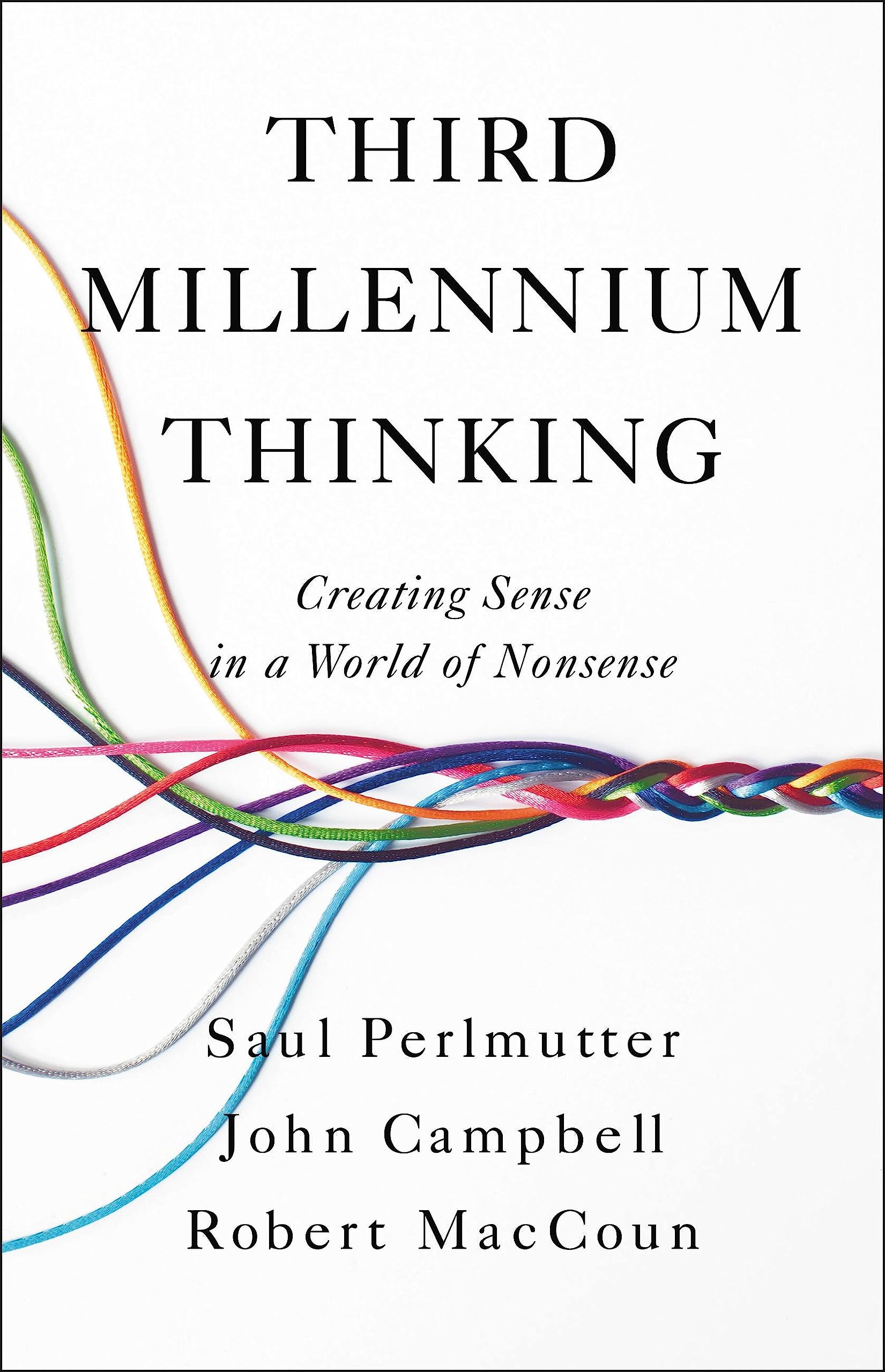
[Based on Sense and Sensibility and Science and written by the course's original professors, Third Millennium Thinking is] a primer on how to think critically, make sound decisions, and solve problems—individually and collectively—using scientists' tricks of the trade.
In our deluge of information, it's getting harder and harder to distinguish the revelatory from the contradictory. How do we make health decisions in the face of conflicting medical advice? Does that article on GMOs even show what the authors claim? How can we navigate the next Thanksgiving discussion with our in-laws, who follow completely different experts on climate?
In Third Millennium Thinking, a physicist, a psychologist, and a philosopher introduce readers to the tools and frameworks that scientists have developed to keep from fooling themselves, to understand the world, and to make decisions. We can all borrow these trust-building techniques to tackle problems both big and small.
Readers will learn:
- How to achieve a ground-level understanding of the facts of the modern world
- How to chart a course through profusion of possibilities
- How to work together to take on the challenges we face today
- And much more
Using provocative thought exercises, jargon-free language, and vivid illustrations drawn from history, daily life, and scientists' insider stories, Third Millennium Thinking offers a novel approach for readers to make sense of the nonsense.
Scientific Thinking For All: A Toolkit
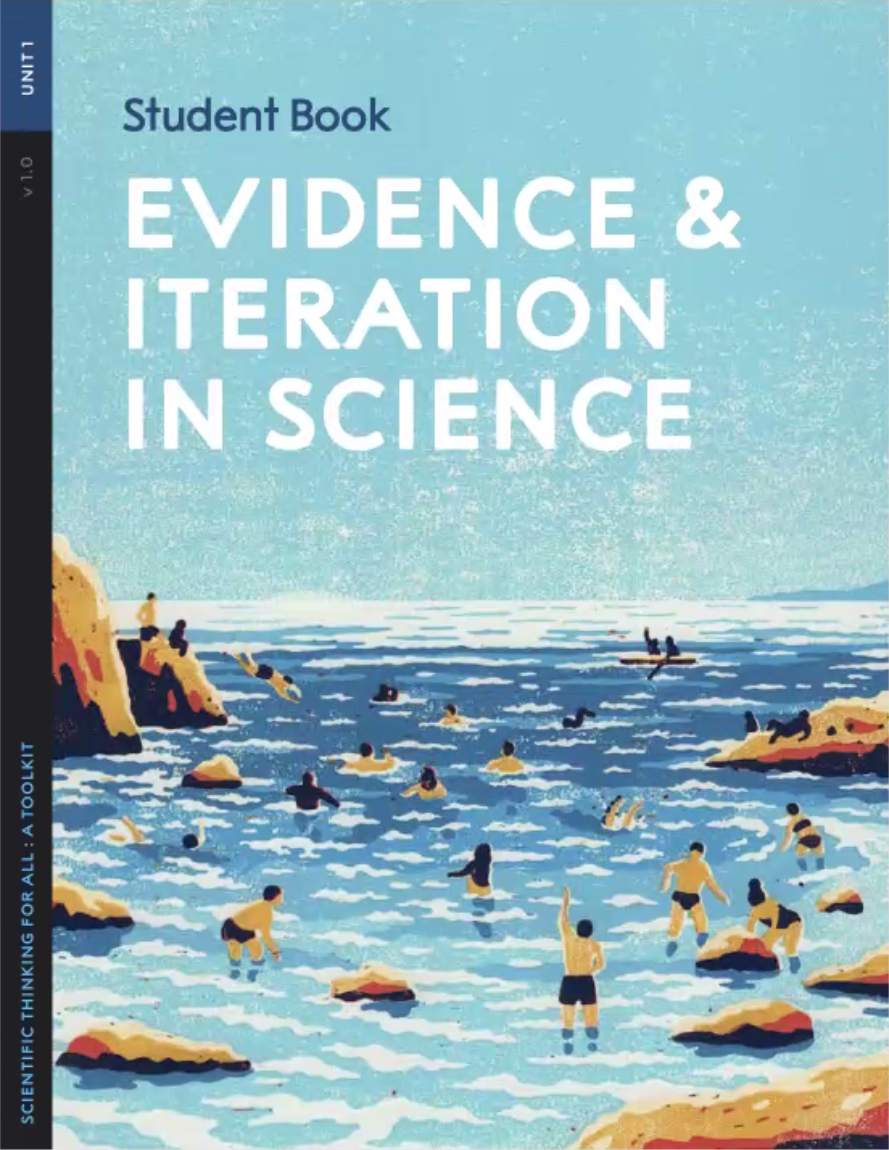
Developed in collaboration with Nobel Prize Outreach and the Lawrence Hall of Science, Scientific Thinking for All: A Toolkit is a multi-unit high school curriculum based on Sense and Sensibility and Science, but targeted towards a younger audience. The course is suitable for any teachers with English-speaking students aged 14-18.
Scientific Thinking for All: A Toolkit is designed to prepare high school students for the challenges and opportunities ahead. It teaches a toolkit of cognitive strategies for real-world issues. By learning to view the world scientifically, students will develop skills in reasoning and collaborating, equipping them to deal with the challenges of the 21st century.
The curriculum takes the form of six units, each using a specific problem as a frame for different concepts from Sense and Sensibility and Science. The first of these, "Evidence and Iteration in Science," starts at a more foundational level than the undergraduate course. It uses clean water access as prompt to teach students how and why collecting empirical evidence (through senses and instrumentation, iteratively, and willingness to change our minds) helps us approach more accurate and complete representations of the material world. The course helps students understand how these representative models allow us to make informed decisions.