
6.2 Hill's Criteria: Difference between revisions
More actions
No edit summary |
// via Wikitext Extension for VSCode |
||
| (2 intermediate revisions by the same user not shown) | |||
| Line 1: | Line 1: | ||
{{Cover|6.2 Hill's Criteria}} | |||
In the messy real world, an ideal randomized controlled trial may not always be feasible, for ethical or practical reasons. Even so, it is still possible to present compelling evidence for causation by considering whether the observed data satisfy a set of intuitive criteria introduced by Bradford Hill. | In the messy real world, an ideal randomized controlled trial may not always be feasible, for ethical or practical reasons. Even so, it is still possible to present compelling evidence for causation by considering whether the observed data satisfy a set of intuitive criteria introduced by Bradford Hill. | ||
== The Lesson in Context == | == The Lesson in Context == | ||
| Line 51: | Line 49: | ||
|-|Examples= | |-|Examples= | ||
{{Example | |||
|Leaded Gasoline and Violent Crimes | |||
|The causal connection between leaded gasoline across the world and violent crimes in many countries. | |||
* '''Prior Plausibility''': High levels of lead are known to cause cognitive damage. It is conceivable that extended exposure to lower levels of lead could have similar effects. | |||
* '''Temporality''': In the graph shown in the video, the levels of violent crime correlate with the use of leaded gasoline, but delayed by about 20 years. | |||
* '''Specificity''': Within the same demographic group, delinquents are 4 times more likely to have elevated bone lead concentrations than non-delinquents. | |||
* '''Dose-response Curve''': See temporality. | |||
* '''Consistency Across Contexts''': The delayed rise in violent crime after increased use of leaded gasoline is observed in many industrialized countries. | |||
|links={{LinkCard | |||
|url=https://youtu.be/IV3dnLzthDA?t=1077 | |||
|title=Leaded Gasoline and Violent Crime | |||
|description=Video on the causal connection between leaded gasoline and violent crime.}} | |||
}} | |||
{{Exemplary | |||
|{{Blockquote|Ok, I agree that 'correlation doesn't prove causation' in general, but in a case like this where we have lots of other kinds of evidence it sure gives us a pretty strong guess about causation.}} | |||
{{Blockquote|About a third of people admitted to relationship cycling, with similar rates among couples of different sexual orientations. That behavior, the researchers found, was correlated with increases in psychological distress, even after accounting for other factors that can influence mental health, such as demographic information, marital and family status, sexual orientation and related stressors. The more on-off cycles a person reported, Monk says, the larger the increases in depression and anxiety seemed to be.|[http://time.com/5377841/off-on-relationships/ Source]}} | |||
{{Blockquote|From this, it follows that predicting future landscape patterns is difficult because contingencies may be unanticipated or even unpredictable. When similar locations can arise from different histories, and similar histories can produce different outcomes (e.g., Ernoult et al. 2006), it is not easy to infer causation.|''Landscape Ecology in Theory and Practice'', pg. 58}} | |||
{{Blockquote|One hundred years after that, French chemist Antoine Lavoisier used a device called an "ice calorimeter" to gauge the energy burn from animals —[https://library.missouri.edu/exhibits/food/lavoisier.html like guinea pigs]— in cages by watching how quickly ice or snow around the cages melted. This research suggested that the heat and gases respired by animals, including humans, related to the energy they burn.|[https://www.vox.com/2018/9/4/17486110/metabolism-diet-fast-weight-loss Source]}} | |||
{{Blockquote|I don't think there is a simple answer, because it is not clear that there is an increased risk of premature death - these are all observational studies and we are not controlling the amount of alcohol people consume and then analyzing the risk of death.|[https://www.reuters.com/article/us-health-alcohol/even-one-drink-a-day-linked-to-lower-life-expectancy-idUSKBN1I42H6 Dr. Eugene Yang]}} | |||
}} | |||
|-|Common Misconceptions= | |-|Common Misconceptions= | ||
| Line 66: | Line 76: | ||
{{Misconception|Students are quick to notice small sample size, slower to notice problems with experimental design.|Students struggle to generate non-RCT types of evidence for causality, although they are better at recognizing it.}} | {{Misconception|Students are quick to notice small sample size, slower to notice problems with experimental design.|Students struggle to generate non-RCT types of evidence for causality, although they are better at recognizing it.}} | ||
|-|Expanded Learning Goals= | |||
After this lesson, students should | |||
# Attitudes | |||
## Appreciate that we can sometimes get very good evidence for a causal hypothesis, even in the absence of decisive RCTs. | |||
## Be wary of potential confounds in apparent evidence for causality. | |||
# Concept Acquisition | |||
## In many cases it is not possible to conduct a true RCT to test causality, for practical or ethical reasons. | |||
## There are non-RCT forms of evidence for causal hypotheses, which are less conclusive than RCTs but together can offer strong evidence for causation. These include: | |||
### '''Prior plausibility:''' Can a plausible mechanism be constructed, or is there some other basis for interpreting the current evidence in terms of one causal structure over another, such as data from other studies? | |||
### '''Temporality/temporal sequence:''' Did the hypothesized cause precede the effect? | |||
### '''Dose-response curve:''' Do the quantities of the hypothesized cause correlate with the quantity, severity, or frequency of the hypothesized effect? | |||
### '''Consistency across contexts:''' Does the correlation appear across diverse contexts? | |||
# Concept Application | |||
## For a given causal hypothesis and imperfect study, identify the imperfections (e.g., sample size, lack of randomization, lack of control) and explain how these imperfections impact claims of causality. | |||
## Identify potential confounds in RCT and non-RCT studies. | |||
## Sketch out methods for eliminating potential confounds in sample RCT or non-RCT studies. | |||
## For a given scenario in which a causal hypothesis/claim is being made, identify plausible alternative hypotheses that could be consistent with the data. | |||
## For a given scenario in which a causal hypothesis is being made, describe an ideal experiment/set of experiments to test the hypothesis and rule out alternative hypotheses. | |||
## Identify cases in which 'ideal' experiments are not possible, due to ethical or practical constraints. | |||
## Evaluate the strength of causal claims when various sources of evidence are used to help mitigate flawed experiments, including prior plausibility, dose-response relationships, size of effect, temporal ordering, and multiple complementarily-flawed experiments. | |||
## Identify additional sources of evidence that could be used to help mitigate flawed experiments, including prior plausibility, dose-response relationships, size of effect, temporal ordering, and multiple complementarily-flawed experiments. | |||
</tabber> | </tabber> | ||
Latest revision as of 23:00, 11 June 2026

In the messy real world, an ideal randomized controlled trial may not always be feasible, for ethical or practical reasons. Even so, it is still possible to present compelling evidence for causation by considering whether the observed data satisfy a set of intuitive criteria introduced by Bradford Hill.
The Lesson in Context
This is a discussion-based lesson that familiarizes students with the concept of Hill's criteria, which are used when an ideal experiment (e.g. RCT) could not be done due to resource or ethical considerations. The criteria themselves are not difficult, but students typically have trouble associating their names with their meanings, and they would benefit from a diverse range of illustrative examples.
Earlier Lessons

- When coming up with alternative explanations to an apparent correlation between two variables, it helps to consider factors that contribute to systematic and statistical uncertainties.

- A credence level is always associated with any scientific claim of causation. As each Hill's criterion adds to a case for causation, so our credence level for a causal relation increases. However, unlike in the case of RCTs, it may be difficult to quantify.
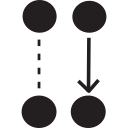
- RCTs are introduced as ideal experiments for establishing causal relationships. These are often not possible due to resource or ethical considerations, and we must resort to Hill's criteria to examine the plausibility of causation. Causation is defined as correlation under intervention. When manual intervention is not possible, Hill's criteria can still build a strong case for causation.
Later Lessons

- Students will explore how science has sometimes been used to justify the oppression of certain human groups. For example, current differences in achievement between human subgroups have been used to infer fundamental differences in biological or cognitive capacity, when in fact they may be sufficiently explained by differences in opportunity. These socially problematic causal inferences stem in part from the impossibility of an RCT that intervenes on genetics while keeping social opportunities equal between subgroups. It is important to recognise potential social implications when evaluating non-RCT evidence for causation, such as when drawing conclusions from observational studies alone.
Takeaways
After this lesson, students should
- Identify cases in which "ideal" RCT experiments are not possible, due to ethical or practical constraints.
- For a given scenario in which a causal hypothesis/claim is being made, identify plausible alternative hypotheses that could be consistent with the data.
- Identify additional sources of evidence that could be used to help mitigate flawed experiments, including prior plausibility, dose-response relationships, specificity, temporal ordering, and consistency across contexts.
- Recognize when causal evidence in the absence of an RCT can be fairly compelling, especially if there are many different types of evidence combined.
Hill's criteria
- Prior Plausibility
- Temporality/Temporal Sequence
- Specificity
- Dose-response Curve
- Consistency Across Contexts
This list may differ from the one on Wikipedia or elsewhere. It may be worth mentioning to students that these are the criteria we have chosen to focus on in this course.
It is not necessary for all of Hill's criteria to be satisfied to infer causation. Each criterion adds to the case for causation. Some criteria are not applicable in certain situations (e.g. dose-response curve in whether light switches cause the light to turn on and off).
Leaded Gasoline and Violent Crimes
- Prior Plausibility: High levels of lead are known to cause cognitive damage. It is conceivable that extended exposure to lower levels of lead could have similar effects.
- Temporality: In the graph shown in the video, the levels of violent crime correlate with the use of leaded gasoline, but delayed by about 20 years.
- Specificity: Within the same demographic group, delinquents are 4 times more likely to have elevated bone lead concentrations than non-delinquents.
- Dose-response Curve: See temporality.
- Consistency Across Contexts: The delayed rise in violent crime after increased use of leaded gasoline is observed in many industrialized countries.
Exemplary Quotes
“Ok, I agree that 'correlation doesn't prove causation' in general, but in a case like this where we have lots of other kinds of evidence it sure gives us a pretty strong guess about causation.”
“About a third of people admitted to relationship cycling, with similar rates among couples of different sexual orientations. That behavior, the researchers found, was correlated with increases in psychological distress, even after accounting for other factors that can influence mental health, such as demographic information, marital and family status, sexual orientation and related stressors. The more on-off cycles a person reported, Monk says, the larger the increases in depression and anxiety seemed to be.”
“From this, it follows that predicting future landscape patterns is difficult because contingencies may be unanticipated or even unpredictable. When similar locations can arise from different histories, and similar histories can produce different outcomes (e.g., Ernoult et al. 2006), it is not easy to infer causation.”
Landscape Ecology in Theory and Practice, pg. 58
“One hundred years after that, French chemist Antoine Lavoisier used a device called an "ice calorimeter" to gauge the energy burn from animals —like guinea pigs— in cages by watching how quickly ice or snow around the cages melted. This research suggested that the heat and gases respired by animals, including humans, related to the energy they burn.”
“I don't think there is a simple answer, because it is not clear that there is an increased risk of premature death - these are all observational studies and we are not controlling the amount of alcohol people consume and then analyzing the risk of death.”
Since we can't run a randomized controlled trial on whether CO2 emissions cause global warming, we can't ever know whether it does.
Students are quick to notice small sample size, slower to notice problems with experimental design.
After this lesson, students should
- Attitudes
- Appreciate that we can sometimes get very good evidence for a causal hypothesis, even in the absence of decisive RCTs.
- Be wary of potential confounds in apparent evidence for causality.
- Concept Acquisition
- In many cases it is not possible to conduct a true RCT to test causality, for practical or ethical reasons.
- There are non-RCT forms of evidence for causal hypotheses, which are less conclusive than RCTs but together can offer strong evidence for causation. These include:
- Prior plausibility: Can a plausible mechanism be constructed, or is there some other basis for interpreting the current evidence in terms of one causal structure over another, such as data from other studies?
- Temporality/temporal sequence: Did the hypothesized cause precede the effect?
- Dose-response curve: Do the quantities of the hypothesized cause correlate with the quantity, severity, or frequency of the hypothesized effect?
- Consistency across contexts: Does the correlation appear across diverse contexts?
- Concept Application
- For a given causal hypothesis and imperfect study, identify the imperfections (e.g., sample size, lack of randomization, lack of control) and explain how these imperfections impact claims of causality.
- Identify potential confounds in RCT and non-RCT studies.
- Sketch out methods for eliminating potential confounds in sample RCT or non-RCT studies.
- For a given scenario in which a causal hypothesis/claim is being made, identify plausible alternative hypotheses that could be consistent with the data.
- For a given scenario in which a causal hypothesis is being made, describe an ideal experiment/set of experiments to test the hypothesis and rule out alternative hypotheses.
- Identify cases in which 'ideal' experiments are not possible, due to ethical or practical constraints.
- Evaluate the strength of causal claims when various sources of evidence are used to help mitigate flawed experiments, including prior plausibility, dose-response relationships, size of effect, temporal ordering, and multiple complementarily-flawed experiments.
- Identify additional sources of evidence that could be used to help mitigate flawed experiments, including prior plausibility, dose-response relationships, size of effect, temporal ordering, and multiple complementarily-flawed experiments.
Additional Content
You must be logged in to see this content.