
6.1 Correlation and Causation: Difference between revisions
More actions
No edit summary |
// via Wikitext Extension for VSCode |
||
| (One intermediate revision by the same user not shown) | |||
| Line 68: | Line 68: | ||
|-|Examples= | |-|Examples= | ||
{{Example | |||
|Spurious Correlations | |||
|A collection of fun and obviously spurious correlations. | |||
{{ | |links={{LinkCard | ||
|url=https://www.tylervigen.com/spurious-correlations | |||
|title=Spurious Correlations | |||
{{ | |description=Website with many fun and obviously spurious correlations.}} | ||
}} | |||
{{Example | |||
{{ | |<math>B</math> causes <math>A</math> | ||
|Many parents worry that children sitting too close to a TV will cause nearsightedness, because they've observed that children who do sit very close to a TV end up having to get glasses. The reality is that children develop nearsightedness without their parents' knowledge and as a result have to sit close to a TV to see clearly.}} | |||
{{Example | |||
{{ | |<math>C</math> causes <math>A</math> and <math>B</math> | ||
|Red wine consumption is correlated with longer life span, but it could really just be that wealthy people consume more red wine and have better resources to stay healthy. In this case, the wealth of the individual is a confounding variable. | |||
|links={{LinkCard | |||
|url=https://pubmed.ncbi.nlm.nih.gov/19406740/ | |||
|title=Red Wine, Longevity, and Confounding (study) | |||
|description=PubMed-indexed study relevant to red-wine and longevity.}} | |||
}} | |||
{{Example | |||
|<math>A</math> causes <math>B</math>, which affects <math>A</math> | |||
|Predator-prey relationship. For example, wolves prey on hares, so a higher wolf population causes a reduction in hare population, but a reduced hare population in turn causes a later reduction in wolf population due to lack of food.}} | |||
{{Example | |||
|Effect of <math>A</math> on <math>B</math> depends on <math>C</math> | |||
|Intense studying can cause worse grades, if one is studying instead of sleeping before an exam.}} | |||
{{Exemplary | |||
|{{Blockquote|Let's think causally here. There are lots of words and concepts that we're getting confused by here, but let's remember that right now all we care about is what is causing what.}} | |||
{{Blockquote|What if causation goes the other way, or there's a common cause? We're getting all upset about the violence on television causing the violence in the streets because they seem to go up and down together in prevalence, but how do we know that it isn't the other way around, or that they aren't both being caused by some third factor. Maybe we can look at the timing of one with respect to the other? Or could we possibly control one of the factors by itself and see what happens?}} | |||
{{Blockquote|Even if we don't know how, this seems to work. I know it seems crazy that you can fix this educational problem of delayed reading simply by feeding cereal to the kids every morning, but this was a pretty impressive randomized controlled trial so it's hard to come up with another explanation.}} | |||
{{Blockquote|There is an answer to this causal question. Just because we can't ethically do a randomized controlled study with these patients, it doesn't mean that we can't make progress establishing the causal link between these treatment options and the outcome. After all, we have pretty good evidence that the energy from the sun is caused by nuclear fusion and we haven't done any randomized controlled experiments!}} | |||
{{Blockquote|He concluded: 'The findings suggest that low carbohydrate diets are unsafe and should not be recommended.' However, he cautioned the study does not prove low carb diets directly raise the risk of a person dying prematurely, and more research is needed to provide definitive proof.|[https://www.newsweek.com/low-carb-diets-linked-higher-risk-death-1092946 Source]}} | |||
{{Blockquote|An example from my environmental problem solving course (ESPM 100) where a guest lecturer came in: Her job was to evaluate why a particular stand of sycamores was dying. When contracted for this work, she was told that many of the trees had a fungus, but she knew that the fungus was always naturally present, so it was not likely the cause of their death. After an investigation lasting two years, the true cause—lack of water due to releasing dam water incorrectly upstream—was discovered. Correlation is an overabundance of fungus on dying trees, causation is a lack of water killing trees.}} | |||
}} | |||
|-|Common Misconceptions= | |-|Common Misconceptions= | ||
| Line 93: | Line 111: | ||
{{Misconception|If the samples are not randomly chosen from the population, then it is not an RCT.|Random sampling is not necessary for an RCT. It only affects the generalizability of the results of an RCT.}} | {{Misconception|If the samples are not randomly chosen from the population, then it is not an RCT.|Random sampling is not necessary for an RCT. It only affects the generalizability of the results of an RCT.}} | ||
|-|Expanded Learning Goals= | |||
After this lesson, students should | |||
# Concept Acquisition | |||
## Correlation is insufficient to demonstrate causation because there are other causal structures that lead to correlation (e.g., a third variable causes both, reverse causal direction). | |||
## '''Randomized Controlled Trial (RCT):''' An attempt to identify causal relations by randomly assigning subjects into two groups and then performing an experimental intervention on the subjects in one of the groups. | |||
### '''Experimental Intervention:''' The act of an experimenter changing one variable in a possible causal network. | |||
### '''Randomized Assignment:''' Given sufficient sample size, randomized assignment rules out confounds by distributing variation randomly between the two groups, thereby avoiding systematic differences except as the result of the intended intervention. | |||
### '''Control Condition:''' Comparison of an experimental to a control condition is necessary in order to distinguish effect of intervention from changes that would have occurred without the intervention. | |||
### '''Sampling:''' A study of a well-chosen sample can tell you something about the population (through induction), if it was selected in such a way as to avoid any systematic differences between the sample and the rest of the population. | |||
## '''Causation:''' <math>X</math> causes <math>Y</math> if and only if <math>X</math> and <math>Y</math> are correlated under interventions on <math>X</math>. | |||
### This is a technical notion, which overlaps with but is slightly different from everyday usage. For example, everyday usage of the word "cause" can be influenced by moral considerations, the complexity of a causal mechanism, and/or the nature of the mechanism. We typically don't say that the big bang "caused" this sequence of letters, or that the presence of oxygen caused the forest fire, etc., but scientifically they are part of the causal history of those phenomena. | |||
### There can be other evidence for causation, even when actually performing an intervention is not feasible. However, saying something is a cause implies that there is in principle a relationship under an intervention. | |||
# Concept Application | |||
## State some of the basic problems in establishing causation. | |||
## Recognize some of the basic problems in establishing causation and use them to identify situations in which claims of causation are and are not warranted. | |||
## Explain why a randomized controlled trial can help rule out spurious correlations. | |||
## Identify the flaw in an argument in which correlation is inappropriately being substituted for causation. | |||
## Address the argument, "Science can only establish correlations; it can't determine causality." | |||
## Use the definition of causation to identify situations in which claims of causation are and are not warranted. | |||
## Design RCTs for sample problems. | |||
## Identify flaws in experimental designs aimed at testing causality and explain how the flaws could be addressed. | |||
</tabber> | </tabber> | ||
Latest revision as of 22:55, 11 June 2026
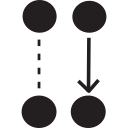
Does taking this vaccine help prevent this disease? How can we be sure? We explain the mantra that "correlation does not equal causation" by defining causation as "correlation under intervention." We introduce randomized controlled trials, a widely used type of experiment that can tell us with a high degree of confidence whether two variables are causally linked.
The Lesson in Context
We introduce one definition of causation—as (statistically significant) correlation under intervention—and the Randomized Controlled Trial (RCT), which is a method of isolating and studying a causal relationship between two variables, even when the world is full of complex causal structures and random variations.
Earlier Lessons
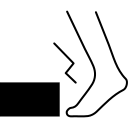
- Causation is a part of the shared reality and thus can be studied by empirical observation and experimentation.

- When we used interactive exploration to establish some trust in our instruments, we implicitly applied the idea of "causation as correlation under intervention".

- The measurement of correlation and causation is subject to both statistical and systematic uncertainty, and RCTs are designed to mitigate these uncertainties.
- Statistical uncertainty: Apparent correlation between two variables might occur simply due to randomness. An RCT should be performed on a sufficiently large representative sample.
- Systematic uncertainty: Samples are randomly assigned to either the intervention or the control group, in order to remove (by averaging out) any potential systematic differences between the two groups due to the way they are assigned.
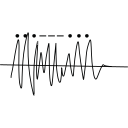
- We can conclude a causal relationship from an RCT if there is a statistically significant difference in the dependent variable between the intervention and control groups. However, a small difference between them is inevitable due to random variations (statistical uncertainty).
- We are trying to detect a significant difference (signal), which may sometimes be difficult to distinguish from a difference that arises by random chance (noise).
- A strong signal would be a difference that is much larger than what could be expected from random chance alone.
- Statistical concepts such as [math]\displaystyle{ p }[/math]-value help us quantify the statistical significance of the result of an RCT—it is the probability that the observed correlation may be produced by random chance alone.
- No RCT can claim 100% confidence, but it must give a [math]\displaystyle{ p }[/math]-value, which quantifies even the tiniest possibility that the result may be a random fluke.
Later Lessons
- Despite the power of RCTs in studying causal relationships, there are yet many cases in which an experimental intervention or control condition is not feasible due to resource or ethics concerns. It is still possible to extract valuable causal information from non-RCT studies using Hill's criteria.
- RCTs probe general causation about a population or a collection of phenomena, but it does not make claims about the precise causal pathway or whether a causal relationship occurs in any singular individual in this population.
Takeaways
After this lesson, students should
- Be able to explain why correlation is insufficient to demonstrate causation because there are multiple causal structures that lead to correlation:
- [math]\displaystyle{ A }[/math] causes [math]\displaystyle{ B }[/math] (direct causation)
- [math]\displaystyle{ B }[/math] causes [math]\displaystyle{ A }[/math] (reverse causation)
- [math]\displaystyle{ A }[/math] and [math]\displaystyle{ B }[/math] are both caused by [math]\displaystyle{ C }[/math]
- [math]\displaystyle{ A }[/math] causes [math]\displaystyle{ B }[/math] and [math]\displaystyle{ B }[/math] causes [math]\displaystyle{ A }[/math] (bidirectional or cyclic causation)
- There is no connection between [math]\displaystyle{ A }[/math] and [math]\displaystyle{ B }[/math], and the correlation is a coincidence
- The effect of [math]\displaystyle{ A }[/math] on [math]\displaystyle{ B }[/math] depends on [math]\displaystyle{ C }[/math]
- Be able to explain and justify the essential features of a Randomized Controlled Trial (RCT): An attempt to identify causal relations by randomly assigning subjects into two groups and then performing an experimental intervention on the subjects in one of the groups.
- Be able to recognize and explain the function of a control condition.
- Be able to recognize and explain the function of randomized assignment.
- Recognize the epistemic power of a well-designed RCT as evidence for causation, if the experimental condition turns out to be significantly different from the control condition.
Randomized Controlled Trial (RCT)
- Random Assignment
- Control Group/Condition
- Trial/Experimental Intervention
Students often think that the "random" in "randomized control trial" refers to how people are selected. They do not need to be sampled randomly from the general population. They just need to be randomly assigned between two groups. The lack of random sampling does not invalidate the study. It just affects how representative the sample is of the larger population.
Correlation
- Positive Correlation
- Negative/Inverse Correlation
Causation
Almost all students understand on some level that "correlation does not imply causation", but they may still feel that really strong correlation "has got to say something." Correlation can be used as an exploratory incentive for looking into something, but without directly controlling one of the correlated variables, you don't in general know anything about their causal relationship.
Spurious Correlations
[math]\displaystyle{ B }[/math] causes [math]\displaystyle{ A }[/math]
[math]\displaystyle{ C }[/math] causes [math]\displaystyle{ A }[/math] and [math]\displaystyle{ B }[/math]
[math]\displaystyle{ A }[/math] causes [math]\displaystyle{ B }[/math], which affects [math]\displaystyle{ A }[/math]
Effect of [math]\displaystyle{ A }[/math] on [math]\displaystyle{ B }[/math] depends on [math]\displaystyle{ C }[/math]
Exemplary Quotes
“Let's think causally here. There are lots of words and concepts that we're getting confused by here, but let's remember that right now all we care about is what is causing what.”
“What if causation goes the other way, or there's a common cause? We're getting all upset about the violence on television causing the violence in the streets because they seem to go up and down together in prevalence, but how do we know that it isn't the other way around, or that they aren't both being caused by some third factor. Maybe we can look at the timing of one with respect to the other? Or could we possibly control one of the factors by itself and see what happens?”
“Even if we don't know how, this seems to work. I know it seems crazy that you can fix this educational problem of delayed reading simply by feeding cereal to the kids every morning, but this was a pretty impressive randomized controlled trial so it's hard to come up with another explanation.”
“There is an answer to this causal question. Just because we can't ethically do a randomized controlled study with these patients, it doesn't mean that we can't make progress establishing the causal link between these treatment options and the outcome. After all, we have pretty good evidence that the energy from the sun is caused by nuclear fusion and we haven't done any randomized controlled experiments!”
“He concluded: 'The findings suggest that low carbohydrate diets are unsafe and should not be recommended.' However, he cautioned the study does not prove low carb diets directly raise the risk of a person dying prematurely, and more research is needed to provide definitive proof.”
“An example from my environmental problem solving course (ESPM 100) where a guest lecturer came in: Her job was to evaluate why a particular stand of sycamores was dying. When contracted for this work, she was told that many of the trees had a fungus, but she knew that the fungus was always naturally present, so it was not likely the cause of their death. After an investigation lasting two years, the true cause—lack of water due to releasing dam water incorrectly upstream—was discovered. Correlation is an overabundance of fungus on dying trees, causation is a lack of water killing trees.”
You cannot infer anything from an RCT about anything that wasn't in the study.
An RCT doesn't tell you very much if it's only a small fraction of the total population that you want to study.
The control and intervention groups need to be roughly the same size.
If an RCT shows strong evidence that X causes Y, then X must cause Y in every single case.
If the samples are not randomly chosen from the population, then it is not an RCT.
After this lesson, students should
- Concept Acquisition
- Correlation is insufficient to demonstrate causation because there are other causal structures that lead to correlation (e.g., a third variable causes both, reverse causal direction).
- Randomized Controlled Trial (RCT): An attempt to identify causal relations by randomly assigning subjects into two groups and then performing an experimental intervention on the subjects in one of the groups.
- Experimental Intervention: The act of an experimenter changing one variable in a possible causal network.
- Randomized Assignment: Given sufficient sample size, randomized assignment rules out confounds by distributing variation randomly between the two groups, thereby avoiding systematic differences except as the result of the intended intervention.
- Control Condition: Comparison of an experimental to a control condition is necessary in order to distinguish effect of intervention from changes that would have occurred without the intervention.
- Sampling: A study of a well-chosen sample can tell you something about the population (through induction), if it was selected in such a way as to avoid any systematic differences between the sample and the rest of the population.
- Causation: [math]\displaystyle{ X }[/math] causes [math]\displaystyle{ Y }[/math] if and only if [math]\displaystyle{ X }[/math] and [math]\displaystyle{ Y }[/math] are correlated under interventions on [math]\displaystyle{ X }[/math].
- This is a technical notion, which overlaps with but is slightly different from everyday usage. For example, everyday usage of the word "cause" can be influenced by moral considerations, the complexity of a causal mechanism, and/or the nature of the mechanism. We typically don't say that the big bang "caused" this sequence of letters, or that the presence of oxygen caused the forest fire, etc., but scientifically they are part of the causal history of those phenomena.
- There can be other evidence for causation, even when actually performing an intervention is not feasible. However, saying something is a cause implies that there is in principle a relationship under an intervention.
- Concept Application
- State some of the basic problems in establishing causation.
- Recognize some of the basic problems in establishing causation and use them to identify situations in which claims of causation are and are not warranted.
- Explain why a randomized controlled trial can help rule out spurious correlations.
- Identify the flaw in an argument in which correlation is inappropriately being substituted for causation.
- Address the argument, "Science can only establish correlations; it can't determine causality."
- Use the definition of causation to identify situations in which claims of causation are and are not warranted.
- Design RCTs for sample problems.
- Identify flaws in experimental designs aimed at testing causality and explain how the flaws could be addressed.
Additional Content
You must be logged in to see this content.