
7.1 Causation, Blame, and Policy: Difference between revisions
More actions
No edit summary |
// via Wikitext Extension for VSCode |
||
| Line 58: | Line 58: | ||
<!-- Misconceptions must be written with the Misconception template. The first Misconception should have the "first=yes" flag at the end. --> | <!-- Misconceptions must be written with the Misconception template. The first Misconception should have the "first=yes" flag at the end. --> | ||
{{Misconception|This drug will absolutely cure you, because there was a really big RCT that showed it works for your exact disease!|RCTs can only | {{Misconception|This drug will absolutely cure you, because there was a really big RCT that showed it works for your exact disease!|This quote is incorrect because RCTs can only general singular causation.|first=yes}} | ||
</tabber> | </tabber> | ||
Revision as of 16:05, 21 March 2024

Real-world decision making must consider more than whether a randomized controlled trial says one variable causes another. In some legal and policy settings, evidence for singular causation, rather than general causation, plays a bigger role. With the Trolley Problem, we illustrate the powerful omission bias. Students are encouraged to reflect on the interplay between blame and causation in decision making.
The Lesson in Context
This course has so far only discussed general causation, which can be demonstrated through randomized controlled trials and to a weaker extent Hill's criteria. But personal, policy, and legal decisions often depend on singular causation as well. It also sometimes matters whether the causation is by commission or by omission. The famous Trolley dilemma is discussed.
Earlier Lessons
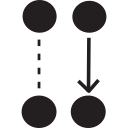
- RCTs only demonstrate general causation but not singular causation. Correlation is also a statistical relationship between two variables, rather than between two singular events.

- As a substitute for RCTs, Hill's criteria also only demonstrate general causation, but can be used in some cases as partial evidence for singular causation (especially plausible mechanism and temporal sequence).
Later Lessons

- Any given effect is brought about by a complex combination of many causes (which may interact with each other), with varying degrees of influence on the outcome. This is true for both singular and general causation.

- The omission bias is one explanation for the status quo bias, in that humans tend to prefer not actively changing the current situation or trend, even when it may be worse than the potential pitfalls of the new outcome.
Takeaways
After this lesson, students should
- Distinguish between singular and general causation.
- Distinguish between the evidence needed to establish singular or general causation.
- Identify different policy implications of singular or general causation.
- Recognize cases where omission bias and status quo bias can influence decision making, even when this results in a worse outcome.
Singular Causation
General Causation
Omission Bias
Status Quo Bias
Drug Trials
- A randomized controlled trial for a drug may demonstrate its general therapeutic effect (general causation), e.g. taking this drug reduces the risks of this disease, but it cannot conclusively demonstrate a causal connection in any particular instance of a patient taking this drug (singular causation).
Weather and Climate Change
- One can claim that climate change causes extreme weather events (general causation), but not that any particular instance of wildfire was caused by climate change (singular causation).
This drug will absolutely cure you, because there was a really big RCT that showed it works for your exact disease!
Additional Content
You must be logged in to see this content.