
3.1 Probabilistic Reasoning: Difference between revisions
More actions
// via Wikitext Extension for VSCode |
No edit summary |
||
| Line 110: | Line 110: | ||
|Scientists used to say this particle is massless (its mass equals zero), but now they say it has a slightly non-zero mass. Their original measurement must've been wrong.|Despite how it's commonly described (sometimes even by scientists themselves), scientists don't typically measure ''the'' value of a quantity. Instead, they always measure a quantity to within some ''range'' of values, and then they say how confident they are that the true value falls within that range (marked with <math>\pm</math> or error bars). | |Scientists used to say this particle is massless (its mass equals zero), but now they say it has a slightly non-zero mass. Their original measurement must've been wrong.|Despite how it's commonly described (sometimes even by scientists themselves), scientists don't typically measure ''the'' value of a quantity. Instead, they always measure a quantity to within some ''range'' of values, and then they say how confident they are that the true value falls within that range (marked with <math>\pm</math> or error bars). | ||
}} | }} | ||
|-|Expanded Learning Goals= | |||
After this lesson, students should | |||
# Attitudes | |||
## Recognize that every proposition comes with a degree of uncertainty. | |||
## Value and defend scientific expressions of uncertainty. | |||
# Concept Acquisition | |||
## '''Credence:''' Level of confidence | |||
</tabber> | </tabber> | ||
Revision as of 15:21, 20 March 2026
As all scientific knowledge may be subject to change in light of new evidence, all claims of fact should only be made or trusted up to a certain degree of confidence. This allows scientists to be open to changing their mind, while still being able to meaningfully compare the validity of factual statements under limited information. This way of thinking is as important in daily life as it is in scientific reasoning.
The Lesson in Context
After introducing the concept of scientific uncertainty in previous lessons, we now teach the students that this uncertainty permeates all discussions of facts. Every factual claim should inherently carry a level of confidence as a percentage. It allows scientists to be open to the possibility that they may be wrong, while still being able to meaningfully discuss and compare the validity of factual statements. We aim to teach students that this way of thinking is important in daily life, often in the context of risk assessment, as well as in common discourse about social issues.
Earlier Lessons
- Facts vs. values: Since credence levels can only be assigned to factual statements, it is important to first distinguish between statements of fact and statements of value.

- Measurements in the real world are imperfect, and measurement uncertainties/errors can be studied and quantified. This translates to a confidence interval for every measurement result, i.e. "We are [math]\displaystyle{ x }[/math] percent confident that the true value lies within this interval."
Later Lessons
- This lesson will follow up on the current one by teaching students how to calculate the calibration, or quality, of their credence, noticing and quantifying both underconfidence and overconfidence.
- In that lesson, students explore how the signal they are looking for in data can be difficult to find amid the noise (random variation, random error, imperfect measurements, etc.). Because data is a mix of signal and noise, inferences from data tend to have some degree of uncertainty, which may be usefully quantified using credence levels or probabilities.
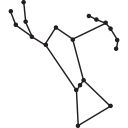
- Since spurious patterns are expected to arise from random noise alone, any claim of actual pattern must carry with it a level of confidence that it is not due to random noise.
- [math]\displaystyle{ p }[/math]-value: The probability that the observed pattern is due to random noise. In other words, one minus the [math]\displaystyle{ p }[/math]-value gives the level of confidence that the observed pattern is not due to random noise.
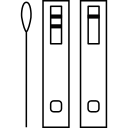
- Since every binary test has a certain rate of false positives and false negatives, the result of such a test should only be understood as a recommendation of odds or risks, rather than a conclusive determination. Successive test results help one adjust their belief as well as their confidence level in that belief, e.g. whether one is suffering from a disease.
Takeaways
After this lesson, students should
- Recognize that every claim comes with some degree of uncertainty.
- Learn the function/utility of scientific expressions of uncertainty.
- Understand that because every proposition comes with a degree of uncertainty:
- Partial and probabilistic information still has value.
- Back-up plans are important since no information is absolutely certain.
- Evaluation of expertise and authority should be more directed towards accurately assigning confidence levels, rather than assuming a true expert would be "right" every single time.
- Scientific culture primarily uses a language of probabilities, and sometimes even well-confirmed facts turn out to be incomplete or not true in every single case.
- Even correctly done science will obtain incorrect results some of the time.
Credence
Confidence
Accuracy
Calibration of Confidence
- [math]\displaystyle{ p }[/math]-value
Statistical Significance
A common misconception is that [math]\displaystyle{ p }[/math]-values are the probability of the hypothesis being false. This is not quite the same thing.
Where Credence Levels Come From
- Past experience (how confident I feel about a statement of fact)
- Instrumental uncertainties
- Natural statistical variance (e.g. people come in different heights, wind speed is different across a town)
Where People Use Credence Levels
- Weather forecasts, specifically chances of rain.
- Using polls to predict elections, phrased in terms of odds for betting (e.g. 50 to 1).
- Making decisions based on a probabilistic risk assessment.
- Credence levels predicting the probabilities of natural disasters within specific time frames (earthquakes, floods, wildfires etc.), and using these to make decisions about disaster preparation.
- Use credence levels about getting into various colleges to decide what to use as a safety school.
My aunt still caught COVID even after taking the vaccine, therefore it's not true that the vaccine prevents COVID.
Scientists used to say this particle is massless (its mass equals zero), but now they say it has a slightly non-zero mass. Their original measurement must've been wrong.
After this lesson, students should
- Attitudes
- Recognize that every proposition comes with a degree of uncertainty.
- Value and defend scientific expressions of uncertainty.
- Concept Acquisition
- Credence: Level of confidence
Additional Content
You must be logged in to see this content.