
6.1 Correlation and Causation: Difference between revisions
More actions
// Edit via Wikitext Extension for VSCode |
// Edit via Wikitext Extension for VSCode |
||
| Line 64: | Line 64: | ||
{{Subdefinition|''Trial''/Experimental Intervention|The act of the experimenter changing a variable under study (the "independent variable") on a subset of the sample, to see if it influences a second variable (the "dependent variable").}} | {{Subdefinition|''Trial''/Experimental Intervention|The act of the experimenter changing a variable under study (the "independent variable") on a subset of the sample, to see if it influences a second variable (the "dependent variable").}} | ||
{{BoxCaution|Students often think that the "random" in "randomized control trial" refers to how people are selected. They ''do not'' need to be sampled randomly from the general population. They just need to be randomly assigned between two groups. The lack of random sampling does not invalidate the study. It just affects how representative the sample is of the larger population.}} | {{BoxCaution|Students often think that the "random" in "randomized control trial" refers to how people are selected. They ''do not'' need to be sampled randomly from the general population. They just need to be randomly assigned between two groups. The lack of random sampling does not invalidate the study. It just affects how representative the sample is of the larger population.}} | ||
{{Definition|Correlation|The correlation between two numerical variables <math>X</math> and <math>Y</math> is a measure of how much they increase/decrease with each other.}} | |||
{{Subdefinition|Positive Correlation|<math>Y</math> increases as <math>X</math> increases.}} | |||
{{Subdefinition|Negative/Inverse Correlation|<math>Y</math> decreases as <math>X</math> increases.}} | |||
{{Definition|Causation|<math>X</math> causes <math>Y</math> if and only if <math>X</math> and <math>Y</math> are correlated under interventions on <math>X</math>.}} | {{Definition|Causation|<math>X</math> causes <math>Y</math> if and only if <math>X</math> and <math>Y</math> are correlated under interventions on <math>X</math>.}} | ||
{{BoxCaution|Almost all students understand on some level that "correlation does not imply causation", but they may still feel that really strong correlation "has got to say ''something''." Correlation can be used as an exploratory incentive for looking into something, but without directly controlling one of the correlated variables, you don't in general know anything about their causal relationship.}} | {{BoxCaution|Almost all students understand on some level that "correlation does not imply causation", but they may still feel that really strong correlation "has got to say ''something''." Correlation can be used as an exploratory incentive for looking into something, but without directly controlling one of the correlated variables, you don't in general know anything about their causal relationship.}} | ||
Revision as of 13:14, 14 August 2023

An introduction to the scientific approach to determining causal relationships.
The Lesson in Context
We introduce one definition of causation—as (statistically significant) correlation under intervention—and the Randomized Controlled Trial (RCT), which is a method of isolating and studying a causal relationship between two variables, even when the world is full of complex causal structures and random variations.

- Causation is a part of the shared reality and thus can be studied by empirical observation and experimentation.

- When we used interactive exploration to establish some trust in our instruments, we implicitly applied the idea of "causation as correlation under intervention".

- The measurement of correlation and causation is subject to both statistical and systematic uncertainty, and RCTs are designed to mitigate these uncertainties.
- Statistical uncertainty: Apparent correlation between two variables might occur simply due to randomness. An RCT should be performed on a sufficiently large representative sample.
- Systematic uncertainty: Samples are randomly assigned to either the intervention or the control group, in order to remove (by averaging out) any potential systematic differences between the two groups due to the way they are assigned.
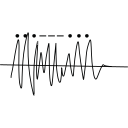
- We can conclude a causal relationship from an RCT if there is a statistically significant difference in the dependent variable between the intervention and control groups. However, a small difference between them is inevitable due to random variations (statistical uncertainty).
- We are trying to detect a significant difference (signal), which may sometimes be difficult to distinguish from a difference that arises by random chance (noise).
- A strong signal would be a difference that is much larger than what could be expected from random chance alone.
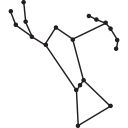
- Statistical concepts such as p-value help us quantify the statistical significance of the result of an RCT—it is the probability that the observed correlation may be produced by random chance alone.
- No RCT can claim 100% confidence, but it must give a p-value, which quantifies even the tiniest possibility that the result may be a random fluke.

- Despite the power of RCTs in studying causal relationships, there are yet many cases in which an experimental intervention or control condition is not feasible due to resource or ethics concerns. It is still possible to extract valuable causal information from non-RCT studies using Hill's criteria.

- RCTs probe general causation about a population or a collection of phenomena, but it does not make claims about the precise causal pathway or whether a causal relationship occurs in any singular individual in this population.
Takeaways
After this lesson, students should
- Be able to explain why correlation is insufficient to demonstrate causation because there are multiple causal structures that lead to correlation:
- [math]\displaystyle{ A }[/math] causes [math]\displaystyle{ B }[/math] (direct causation)
- [math]\displaystyle{ B }[/math] causes [math]\displaystyle{ A }[/math] (reverse causation)
- [math]\displaystyle{ A }[/math] and [math]\displaystyle{ B }[/math] are both caused by [math]\displaystyle{ C }[/math]
- [math]\displaystyle{ A }[/math] causes [math]\displaystyle{ B }[/math] and [math]\displaystyle{ B }[/math] causes [math]\displaystyle{ A }[/math] (bidirectional or cyclic causation)
- There is no connection between [math]\displaystyle{ A }[/math] and [math]\displaystyle{ B }[/math], and the correlation is a coincidence
- The effect of [math]\displaystyle{ A }[/math] on [math]\displaystyle{ B }[/math] depends on [math]\displaystyle{ C }[/math]
- Be able to explain and justify the essential features of a Randomized Controlled Trial (RCT): An attempt to identify causal relations by randomly assigning subjects into two groups and then performing an experimental intervention on the subjects in one of the groups.
- Be able to recognize and explain the function of a control condition.
- Be able to recognize and explain the function of randomized assignment.
- Recognize the epistemic power of a well-designed RCT as evidence for causation, if the experimental condition turns out to be significantly different from the control condition.
Randomized Controlled Trial (RCT)
- Random Assignment
- Control Group/Condition
- Trial/Experimental Intervention
Students often think that the "random" in "randomized control trial" refers to how people are selected. They do not need to be sampled randomly from the general population. They just need to be randomly assigned between two groups. The lack of random sampling does not invalidate the study. It just affects how representative the sample is of the larger population.
Correlation
- Positive Correlation
- Negative/Inverse Correlation
Causation
Almost all students understand on some level that "correlation does not imply causation", but they may still feel that really strong correlation "has got to say something." Correlation can be used as an exploratory incentive for looking into something, but without directly controlling one of the correlated variables, you don't in general know anything about their causal relationship.
Spurious Correlations
[math]\displaystyle{ B }[/math] causes [math]\displaystyle{ A }[/math]
- Many parents worry that children sitting too close to a TV will cause nearsightedness, because they've observed that children who do sit very close to a TV end up having to get glasses. The reality is that children develop nearsightedness without their parents' knowledge and as a result have to sit close to a TV to see clearly.
[math]\displaystyle{ C }[/math] causes [math]\displaystyle{ A }[/math] and [math]\displaystyle{ B }[/math]
- Red wine consumption is correlated with longer life span, but it could really just be that wealthy people consume more red wine and have better resources to stay healthy. In this case, the wealth of the individual is a confounding variable. (Study)
[math]\displaystyle{ A }[/math] causes [math]\displaystyle{ B }[/math], which affects [math]\displaystyle{ A }[/math]
- Predator-prey relationship. For example, wolves prey on hares, so a higher wolf population causes a reduction in hare population, but a reduced hare population in turn causes a later reduction in wolf population due to lack of food.
Effect of [math]\displaystyle{ A }[/math] on [math]\displaystyle{ B }[/math] depends on [math]\displaystyle{ C }[/math]
- Intense studying can cause worse grades, if one is studying instead of sleeping before an exam.
You cannot infer anything from an RCT about anything that wasn't in the study.
An RCT doesn't tell you very much if it's only a small fraction of the total population that you want to study.
The control and intervention groups need to be roughly the same size.
If an RCT shows strong evidence that X causes Y, then X must cause Y in every single case.
If the samples are not randomly chosen from the population, then it is not an RCT.
Useful Resources
Recommended Outline
Before Class
Make sure you review the Jupyter Notebook and look through the Nordic Hamstring Exercise paper.
During Class
| 5 Minutes | Introduce the lesson and go over the plan for the day. Make sure people have groups, spokespeople, etc. |
| 5 Minutes | Go over the warm-up question and very quickly remind the students of the concepts from lecture. |
| 35 Minutes | Have the students work through the paper analysis activity in small groups. |
| 30 Minutes | Have the students work through Truffula Jupyter Notebook in pairs. |
Lesson Content
Warm-up Question
Suppose there's an epidemic of Lyn's disease and a new drug is proposed as a treatment. 10,000 patients with the disease are given the drug, and 8,700 of them recover. Does this result:
- Give no info about the presence or absence of a causal link.
- Establish that the treatment makes no difference.
- Tentatively confirm the efficacy of the treatment, though more evidence may be needed.
- Demonstrate conclusively the existence of an effect.
Explanation
There's no control group.
Paper Analysis (Part 1)
Students will read the abstract or skim through the text of three different scientific papers (one today and two in 6.2 Hill's Criteria) and comment on the extent to which they follow the structure of an RCT. For students who are unfamiliar with scientific papers, this will be an opportunity to demystify them.
Remind students that they do not need to understand every word or phrase in the abstract, and certainly not in the main text. They only need to extract the important information about the question under study, the design, and results, and the interpretation.
Instructions
| 5 Minutes | Explain the activity and give the students some tips on how to read scientific papers. |
| 20 Minutes | Have the class review the Nordic Hamstrings Exercise paper in small groups. |
| 10 Minutes | Have the class share their thoughts on the paper. |
How to Effectively Skim Papers
- Read the abstract
- Skim the introduction
- Look at the figures
- Read at least the first few paragraphs of the conclusion
Discussion Questions
The students should try to answer the following.
- What causal relationship is this paper trying to study? What is the hypothesis?
Whether players do the NHE.
- What, if it exists at all, is the experimental intervention? (i.e., What is the independent variable that is being manipulated)?
Whether players do the NHE.
- What is the dependent variable that is being measured (i.e., the variable the researchers anticipate may be affected by the experimental intervention)?
The number of hamstring injuries (and their severity).
- How is the independent variable manipulated? Are there control and intervention groups? Are those randomly assigned? Is the control condition a good one (only the independent variable is different, with all else kept equal)? Is this an RCT?
Players are randomly assigned to two groups. The intervention group is asked to do NHE, while the control group is not. This is a good control, as all other variables are kept equal. This is an RCT.
- What is the result of the experiment?
Experimenters found a significant reduction in hamstring injuries in the intervention group. They did not find a significant difference in injury severity between the two groups.
- Can the causal relationship in question 1 be concluded from the experimental results? If not, what, if anything, can be concluded? How confident are you in this conclusion?
Yes, there is a causal relationship as demonstrated by this study. There is no causal relationship between NHE and injury severity.
- Can you think of an alternative explanation for the data?
It could just be noise, since the sample isn't that big, but the difference is big enough that seems unlikely. Since it's an RCT, it's designed to minimize the chances of a confound, and it's hard to think of a very likely alternative explanation.
One complication is that the reduction in injuries may be due to the belief that NHE works (placebo effect), or because of any sort of consistent pre-game exercise, rather than NHE itself.
Jupyter Notebook
This activity is intended to give the students the experience of performing their own RCT.
We recommend pairing students, ideally one more and one less familiar with Jupyter notebooks. The notebook is self-contained, and the instructor should offer timely assistance and possibly demonstrate on their own computer wherever necessary.
Instructions
| 20 Minutes | The class works through the Jupyter notebook |
| 10 Minutes | Go over the post-notebook discussion questions. |
Truffula Notebook Video Demo
Discussion Questions
Question 1
"If the experimenter is merely observing and measuring, without actively performing an intervention themself, then it is not an RCT." Is this a correct statement?
No. While an intervention is necessary for an RCT, it doesn't have to be performed by the experimenter themself. It may be performed by some environmental factor that is effectively random and that averages over all other causal factors. See the Vietnam War draft study for example.
This is called a natural experiment, which is very common in the study of humans and ecosystems, which are difficult or impossible to directly intervene on.
Question 2
Psychological studies often recruit subjects from university undergraduates. This means that their sampling is not random. How is random sampling different from randomized assignment? How does the sampling method affect the validity or conclusion of a study?
Random sampling is the random selection of individuals from a population. Randomized assignment is the process of placing individuals into either the intervention or the control group in a random way, paying no regard to any quality, after the sample of individuals has already been selected from a population. The sampling method affects how representative the sample is and how generalizable the experimental conclusion is to the whole population. It may affect the validity of a study depending on how their authors state their conclusion.
Misconception
If the samples are not randomly chosen from the population, then it is not an RCT.