
13.2 Deliberative Polling: Difference between revisions
More actions
No edit summary |
No edit summary |
||
| Line 2: | Line 2: | ||
Deliberative polling improves upon ordinary public opinion polling by allowing the randomly sampled participants to deliberate with each other and ask for expert knowledge, integrating facts and values. For making important policy decisions, such a process simulates the opinions of an informed public. A mock deliberative polling event is hosted every term, with past topics such as natural gas fracking, gene drives in mosquitos, and social media policy. | Deliberative polling improves upon ordinary public opinion polling by allowing the randomly sampled participants to deliberate with each other and ask for expert knowledge, integrating facts and values. For making important policy decisions, such a process simulates the opinions of an informed public. A mock deliberative polling event is hosted every term, with past topics such as natural gas fracking, gene drives in mosquitos, and social media policy. | ||
{{BoxWarning|We have a different panel and topic every year. So, the substance of this lesson can change quite substantially. Much of what's written here is an example based on what was used in UC Berkeley's Spring 2023 iteration of the course.}} | |||
{{Navbox}} | {{Navbox}} | ||
| Line 24: | Line 24: | ||
{{ContextRelation|In the Denver Bullet Study method, the final recommendation is provided by experts to match the values put forth by various stakeholders. The citizens don't need to know about the technical details at all. All they have to worry about are the values. In deliberative polling, the experts are there to inform the general public who are integrating facts and values for themselves.}} | {{ContextRelation|In the Denver Bullet Study method, the final recommendation is provided by experts to match the values put forth by various stakeholders. The citizens don't need to know about the technical details at all. All they have to worry about are the values. In deliberative polling, the experts are there to inform the general public who are integrating facts and values for themselves.}} | ||
}} | }} | ||
== Takeaways == | == Takeaways == | ||
Revision as of 17:28, 30 August 2023

Deliberative polling improves upon ordinary public opinion polling by allowing the randomly sampled participants to deliberate with each other and ask for expert knowledge, integrating facts and values. For making important policy decisions, such a process simulates the opinions of an informed public. A mock deliberative polling event is hosted every term, with past topics such as natural gas fracking, gene drives in mosquitos, and social media policy.
We have a different panel and topic every year. So, the substance of this lesson can change quite substantially. Much of what's written here is an example based on what was used in UC Berkeley's Spring 2023 iteration of the course.
The Lesson in Context
Near the end of the course, we introduce some techniques for group decision making that have seen some real-world success. Deliberative polling is one such method that allows citizens to make a democratic decision on some policy option in accordance with their values but with the knowledge of experts at their disposal.
Earlier Lessons
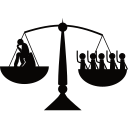
- Students are familiar with the tension between facts in an epistocracy and values in a democracy. The primary purpose of a deliberative poll is to resolve this conflict by giving members of the general public access to the narrow expertise needed for some difficult policy decision.

- Deliberative polling may be able to help resolve the issues of status quo bias in policy making. It does so by forcing people to carefully consider a wider array of policy options as well as the implications and consequences of each.
- However, people are not immune to their other biases just because they're in a deliberative poll. Omission bias can still be a strong motivator in determining which policy the members of the public select.

- Selective exposure can be addressed by deliberative polling since all the participants (both members of the general public and experts) are forced to be exposed to multiple sides of whatever policy they're debating.
- Deliberative polling does not necessarily help with biased assimilation.

- In the Denver Bullet Study method, the final recommendation is provided by experts to match the values put forth by various stakeholders. The citizens don't need to know about the technical details at all. All they have to worry about are the values. In deliberative polling, the experts are there to inform the general public who are integrating facts and values for themselves.
Takeaways
After this lesson, students should
- Be optimistic about the possibility of integrating the perspectives and insights of both experts and stakeholders in forming effective policies with community buy-in.
- Recognize problems which could be resolved effectively using deliberative polling.
Deliberative Polling
- Participants are not required to come to an agreement.
- Participants are asked to speak to the facts presented in the briefing material, rather than try to convince other group members of their position.
- Experts are only there to answer questions posed by participants, rather than try to convince people of their own position.
- Each small group is moderated by a neutral moderator.
Deliberative Democracy Lab
America One Room Experiment
Additional Content
You must be logged in to see this content.