
2.1 Senses and Instrumentation: Difference between revisions
More actions
No edit summary |
No edit summary |
||
| Line 1: | Line 1: | ||
{{Cover|2.1 Senses and Instrumentation}} | |||
"Seeing is believing," but should I believe what I see through a telescope? Or the reading I see on a thermometer? Instruments extend our experience of the world beyond our senses. Just as with our senses, we gain trust in scientific instruments through interactive exploration and comparison. | "Seeing is believing," but should I believe what I see through a telescope? Or the reading I see on a thermometer? Instruments extend our experience of the world beyond our senses. Just as with our senses, we gain trust in scientific instruments through interactive exploration and comparison. | ||
Revision as of 20:27, 21 February 2024

"Seeing is believing," but should I believe what I see through a telescope? Or the reading I see on a thermometer? Instruments extend our experience of the world beyond our senses. Just as with our senses, we gain trust in scientific instruments through interactive exploration and comparison.
The Lesson in Context
This lesson links the idea that there's a shared reality "out there" and the beginnings of our comprehension about it. It does this by providing the foundation for why we can trust that the instruments we use are in fact measuring something real about reality. The lessons after this are about how we interpret the results of our measurements and start to unpack what they're actually telling us about reality.
Earlier Lessons

- Senses and instruments as means to study the shared reality.
- Ways to help us feel "real" about things we can't directly see.
Later Lessons

- Accept that instruments are inaccurate or imprecise.
- Ways to quantify this inaccuracy and imprecision in our measurements.
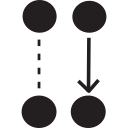
- The value of interactive exploration can be understood in terms of causation as "correlation under intervention."
Takeaways
After this lesson, students should
- Place appropriate trust in instruments where direct observation is not possible (or is less precise/accurate).
- Understand that interaction with reality through instruments can extend the belief of a shared objective reality to objects and phenomena to which our raw senses do not have direct access.
- Understand the challenges of validating an instrument and general methods of validation.
Instrument
An instrument is not just something that provides information. A thermometer is an instrument but a weather app is not.
Students tend to overextend the category of "scientific instruments to enable wider observation" to appeals to authority like books and Google and to tools that add to rather than clarify observations, like PokemonGo and psychedelics.
Validation Challenges
Validation Techniques
- Interactive Exploration
Students are often confused about interactive exploration and often do not incorporate the validation of instruments into their understanding.
Instrument Ladder
Why should we trust our senses at all if they can be fooled by, say, optical illusions or hallucinations? Why should we trust instruments at all if they are imprecise and may have a defect?
We can't really know anything about other galaxies, because we can only see them through fancy instruments and we can never know if the instruments are telling us the truth.
Additional Content
You must be logged in to see this content.