
1.2 Shared Reality and Modeling
More actions

Science is grounded in belief in a common, shared reality with some degree of regularity.
The Lesson in Context
In this lesson, we lay the philosophical groundwork for future topics by establishing a common set of assumptions and attitudes in science, namely, that the world is full of regular patterns that can be studied empirically, and that scientific knowledge is constantly evolving in light of new evidence.

- Decision making relies on knowing the effects of each decision in the real world. Collective decision making thus relies on a collective understanding of the shared reality through the scientific method.

- Our understanding of the shared reality is never perfect, but is always improving. When it comes to measured quantities, it is possible and necessary to quantify the inaccuracy or imprecision in our description of the shared reality.

- Since every claim of fact is to some degree uncertain, each claim should be associated with a level of confidence, or a probability that it is correct.

- Although the first step of a scientific attitude is to admit one's ignorance or the uncertainty in one's knowledge, it is still possible to make progress by successive iterative improvements.
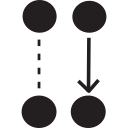
- One important aspect of the shared reality is cause and effect, which is studied in a series of future lessons on causation.

- When constructing a model of a complex system, we need to abstract out the most important aspects of the system in relation to the question at hand. This requires understanding (or hypothesizing) the order of importance of various aspects of the system, so that only the top one(s) are considered.

- A type of event that helps the public make better group decisions after being informed on the relevant (shared) facts about an issue.
Takeaways
After this lesson, students should
- Understand that the self-correcting and ever-changing nature of science is a strength, not a weakness.
- Feel optimistic about the capacity of science to help solve problems for societal and personal decision-making.
- Understand the assumption of shared reality with regular patterns and the power of empirical evidence as a way to study this shared reality.
- Appreciate that scientific knowledge is built more like a raft than a pyramid.
- Understand the need for scientific modelling and how our knowledge of reality is necessarily expressed in terms of models.
It's easy for students to get hung up on philosophical minutiae or edge cases of what really is reality, or does it even exist. Try to pull students back to the main goal of making practical decisions in our lives or in society by using science to understand the assumed shared reality. We only need things to be as real as the table in the middle of the room, so one can walk around it and avoid hurting oneself.
Raft vs. Pyramid
- The Raft
- The Pyramid
Scientific Models
Assumption of Reality
Empirical Evidence
Evaluation of Models
- Ability to explain past observations.
- Ability to explain future observations.
- Simplicity or ease of use.
- Refutability and the ability to characterize our confidence in the model for a given problem.
Science vs. Decree
These are additional definitions that appear in the lecture but aren't deeply discussed in the discussion's lesson plan.
Realism vs. Idealism
- Realism
- Idealism
Scientific Realism vs. Anti-realism
- Scientific Realism
- Anti-realist theories of science differ from one another. Among the views defended:
- Scientific theories can never "reach beyond" experience in what they say.
- Perhaps scientific theories can make claims that reach further, but we can't ever expect to get claims of that kind right.
- The objects of scientific study themselves do not exist in a truly mind-independent fashion.
Types of Metrics
- Conventionalist Metrics
- Operationalist Metrics
- Realist Metrics
[Example Name]
- [Example Description]
[Example Name]
- [Example Description]
[Description of misconception.]
[Description of misconception.]
Useful Resources
[[address] Discussion Slides Template]
[[address] The discussion slides for this lesson.]
[[address] [Title]]
[[address] [Description.]]
[[address] [Title]]
[[address] [Description.]]
Recommended Outline
Before Class
Any steps that need to be taken before class.
During Class
| [n] Minutes | [Activity.] |
| [n] Minutes | [Activity.] |
Lesson Content
Activity 1
[Brief description of and motivation for the activity]
[Common misconception or thing to look out for.]
[Thing you really need to look out for!]
[Title]
[Useful tip, guideline, or other background.]
Instructions
| [n] Minutes | [Activity.] |
| [n] Minutes | [Activity.] |
Discussion Questions
[Question 1]
[Possible misconception that may need to be corrected and clarified.]
[Intended answer to the above question.]
[Question 2]
[Possible misconception that may need to be corrected and clarified.]
[Intended answer to the above question.]