
8.1 Orders of Understanding
More actions

Often the simplest and crudest explanation is sufficient to understand a phenomenon, without the need to worry about the finer details. For any given phenomenon, we encourage students to consider the most important, first-order, causes, before moving on to far less important, second- and higher-, order causes. This structured scientific way of thinking is crucial for policy making when resources are limited.
The Lesson in Context
This lesson introduces a practical framework for discussing cause and effect in this complex world. Specifically, the students should learn that there are usually multiple causes contributing to a certain effect, and it is possible to compare the magnitude of the effects from different causes. We wish to encourage students to develop the habit of considering multiple possible causes, rather than just claiming that "[math]\displaystyle{ X }[/math] is the cause of [math]\displaystyle{ Y }[/math]".
Earlier Lessons

- Simplification is necessary when modeling a phenomenon. A first step is to extract and describe the most important feature of the phenomenon (first-order effect) and then add refinements to the model to describe finer details (higher-order effects).
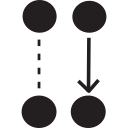
- Causation is defined as correlation under intervention, or in other words, a clear effect is observed when the intervention is done as contrasted to when the intervention is not done (the control condition). Orders of explanation can be argued by considering the magnitude of the effect when each causal factor is turned on or off.
- RCTs are an idealized way to study the size of the effect due to a certain cause, enabling researchers to hold all else constant (in the ideal case). It is possible to compare the magnitude of the effects due to two different causes by conducting an RCT with more than two conditions.

- When RCTs are impractical or impossible to conduct, Hill's criteria may be used to argue about the existence and magnitude of the effect due to a certain cause.
Later Lessons

- The next lesson will introduce a practical method that can help us quickly estimate the magnitude of numerical quantities when there is little available information. We will use the Fermi estimation method to compare different sources of US government spending.
Takeaways
After this lesson, students should
- Recognize that there are usually multiple causes that contribute to an effect to varying degrees, ranked first-, second-, third-order, and so on.
- Recognize that there are often multiple causes of the same order of importance.
- Understand that a model is inevitably a simplification of the real world. As one includes finer and finer details, one is taking into account higher and higher order causes.
- The order of a cause is determined by the magnitude of its effect, relative to other causes.
- When creating a model, there are some factors (causes) for which we don't consider the order, because we assume them to be constant (for example, they are the underlying environment or circumstance). Whether or not we assume something to be constant may be partly a question of values. (For example, when considering a model of traffic accidents, we typically don't include oxygen content in the air, even though if the oxygen suddenly went out, everyone would crash.)
Order of Magnitude
This is an intuitive, rather than exact, concept. For example, we may say 2,340 is one order of magnitude higher than 488 but on the same order of magnitude as 977. Fermi estimates only have to be accurate up to a couple of orders of magnitude, so numbers can be replaced by other more convenient numbers on the same order of magnitude.
Order of Understanding/Description
Orders of Causes
Shape of the Earth
- At zeroth order (even more basic than first order), we can model the earth as flat; this works for many purposes (e.g. navigating a city or country) but is incomplete. At first order, a sphere. At second order, an oblate spheroid (pear shape). At third order, one can include the terrain features such as mountains and valleys in the model. Further refinements can still be made. (See The Relativity of Wrong by Isaac Asimov.)
- To put this more numerically, the curvature of a flat earth is 0 feet per mile, while that of a perfectly spherical earth would be 0.667 feet per mile, a refinement from 0. On the earth's oblate spheroidal surface, the curvature varies from 0.6644 feet per mile to 0.6689 feet per mile, which is a tiny refinement from a sphere.
Commute to Work
- When describing the route from home to work, the zeroth order description may just be a straight line. The first order may include the actual roads and turns along the way, and the second order may include the lanes and traffic lights. At higher orders, one may include the traffic condition and pedestrians.
Maslow's Hierarchy of Needs
- Since the hierarchy is constructed such that each previous level must be satisfied before the higher ones become relevant, you can consider the lowest level as first order and each level up as one order higher.
In every century people have thought they understood the universe at last, and in every century they were proved to be wrong. It follows that the one thing we can say about our modern "knowledge" is that it is wrong.
You know what the real cause of unemployment is? It's the stimulus cheques that the government is distributing discouraging people from finding a job.
Additional Content
You must be logged in to see this content.