
2.1 Senses and Instrumentation
More actions

"Seeing is believing," but should I believe what I see through a telescope? Or the reading I see on a thermometer? Instruments extend our experience of the world beyond our senses. Just as with our senses, we gain trust in scientific instruments through interactive exploration and comparison.
The Lesson in Context
This lesson links the idea that there's a shared reality "out there" and the beginnings of our comprehension about it. It does this by providing the foundation for why we can trust that the instruments we use are in fact measuring something real about reality. The lessons after this are about how we interpret the results of our measurements and start to unpack what they're actually telling us about reality.
Earlier Lessons

- Senses and instruments as means to study the shared reality.
- Ways to help us feel "real" about things we can't directly see.
Later Lessons

- Accept that instruments are inaccurate or imprecise.
- Ways to quantify this inaccuracy and imprecision in our measurements.
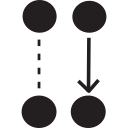
- The value of interactive exploration can be understood in terms of causation as "correlation under intervention."
Takeaways
After this lesson, students should
- Place appropriate trust in instruments where direct observation is not possible (or is less precise/accurate).
- Understand that interaction with reality through instruments can extend the belief of a shared objective reality to objects and phenomena to which our raw senses do not have direct access.
- Understand the challenges of validating an instrument and general methods of validation.
Instrument
An instrument is not just something that provides information. A thermometer is an instrument but a weather app is not.
Students tend to overextend the category of "scientific instruments to enable wider observation" to appeals to authority like books and Google and to tools that add to rather than clarify observations, like PokemonGo and psychedelics.
Validation Challenges
Validation Techniques
- Interactive Exploration
Students are often confused about interactive exploration and often do not incorporate the validation of instruments into their understanding.
Instrument Ladder
Exemplary Quotes
“It sure helped public health and medicine once we realized there were things affecting our health that were just a little too small to see. I wonder if we could have figured that out without the invention of the microscope. I guess we might have just thought there were more invisible entities out there.”
“It didn't occur to anybody that there was such a clear periodic pattern in the populations of those wolves and rabbits until somebody just started writing down every sighting—we're pretty bad at estimating and remembering times between occasional events.”
“It's amazing to first see a slow motion picture of a violin string making a note—wouldn't it be great if our eyes and brains were fast enough to do this?”
“Do you think that modern technology offering us more different vantage points fundamentally changes our position on any practical questions? For example, does it make a difference that in relatively recent decades we have gotten used to seeing the earth as a whole from space?”
Why should we trust our senses at all if they can be fooled by, say, optical illusions or hallucinations? Why should we trust instruments at all if they are imprecise and may have a defect?
We can't really know anything about other galaxies, because we can only see them through fancy instruments and we can never know if the instruments are telling us the truth.
After this lesson, students should
- Attitudes
- Place appropriate trust in instruments where direct observation is not possible (or is less precise or accurate).
- Concept Acquisition
- An instrument can have greater precision and accuracy than direct observation or the instruments used to test and calibrate it.
- Validity of a Measure: Is the measure yielding information about the target entity out in the world, given that the target is something real (i.e., the concept is valid).
- Challenges in validating the use of an instrument:
- When there is no objective gold standard (e.g. passage of time, what fluid to use in a thermometer).
- When direct observation is messy or impossible (e.g. radio waves, size).
- Techniques for validating instruments:
- Interactive exploration: Testing an instrument by changing the thing it is measuring in ways you know through other means, and seeing if the instrument recognizes the changes appropriately (e.g. does driving increase a car's odometer; see how singing higher and lower notes affects a sound spectrograph; sprayable electrons in Hacking reading).
- Comparison of multiple instruments (e.g. thermometers).
- Comparison to direct observation (e.g. naked sight compared to sight with a magnifying glass).
- Concept Application
- Recognize the continuum from direct observation to indirect observation via instruments.
- Identify when and how interactive exploration, comparison of multiple instruments, and comparison to direct observation can be used to validate instruments.
- Identify cases in which instrumentation is needed to solve problems (e.g. entities or events that are too slow, too fast, or too small—those for which we cannot rely on our everyday senses and cognitive capacities), especially in policy contexts.
- Explain how our ability to use the techniques for validating an instrument above can lead to more or less confidence in a given measurement.
- Identify where challenges in validating an instrument (and the associated lack of confidence about what it is measuring) can make policy decisions more difficult.
Additional Content
You must be logged in to see this content.